Hello out there. I did this blog post quite a while ago, but thought in today’s adversarial political and cultural environment, it might be relevant. We (okay, I!) judge others much too quickly.
************
Let’s try, in this new year with relatively few mistakes in it so far, to give each other the benefit of the doubt, to refuse to label somebody or some thing based on initial interactions or our preconceived notions.
What an incredible truth! (And, oh gosh, how it indicts me.)
I LOVE this short video about labeling:
*
Let’s try to make it a label-free year (at least for you and me).
A post about aging parents from way back in 2013. Both my mother and father have passed away since then. Please excuse my camera “photography” from a decade ago.
**************
Early yesterday morning I drove up to my north-of-Atlanta hometown of Ball Ground for a short visit with my mom and dad.
My dad–Harold or Tub–is 89 (90 in November–come to the party!), and my mom–Geneva–turned 86 in May. I can’t even begin to tell you how much fun we have when I visit. They taught me (are still teaching me) to laugh, to enjoy life.
Here are Ten Reasons I loved my little visit.
1. The early dinner that awaited me upon my 11 am arrival. Okay, for some of you this will be a bit confusing, but in Ball Ground lunch is called dinner, and dinner is called supper. (Breakfast is called Hardees.)
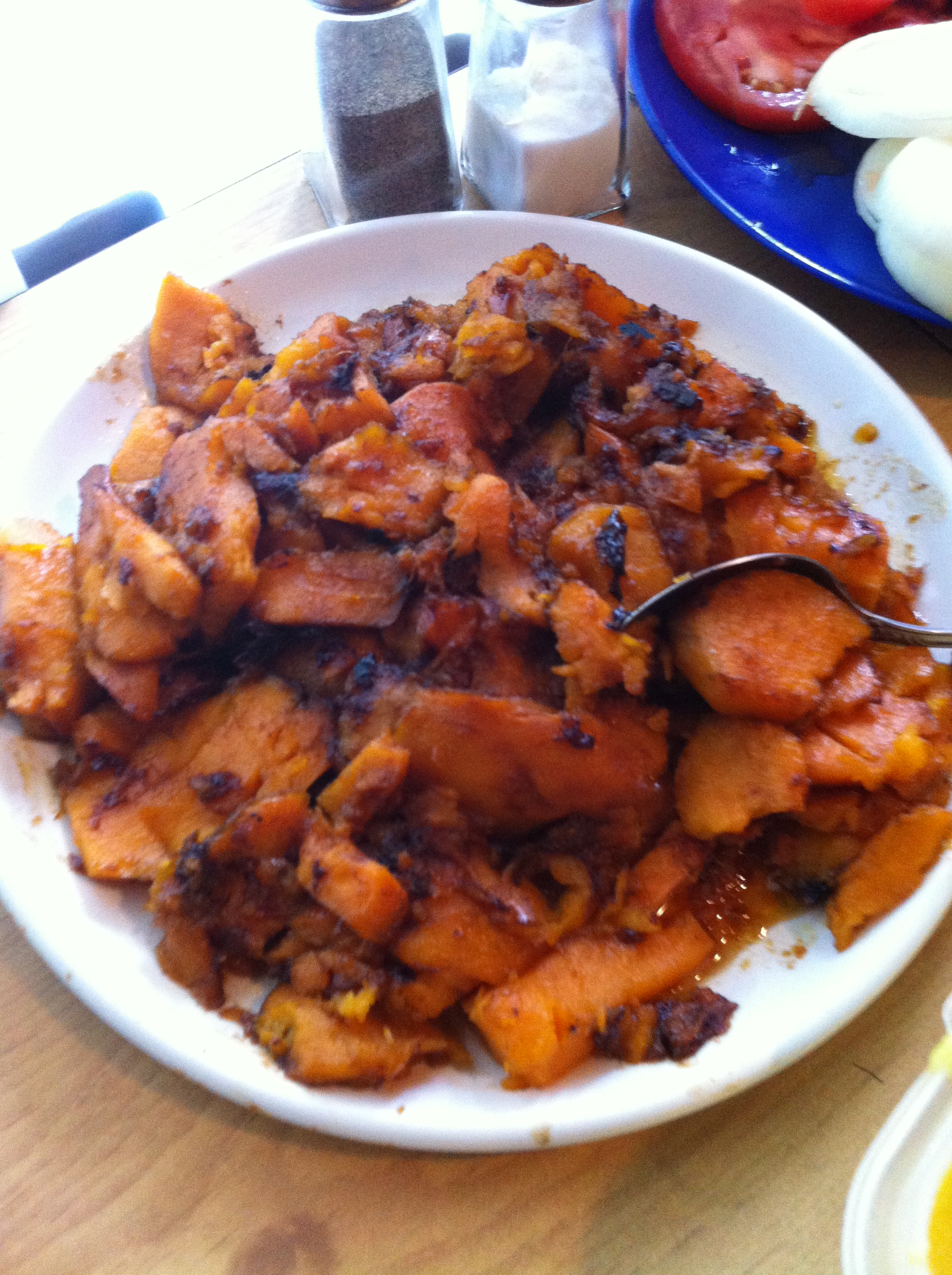
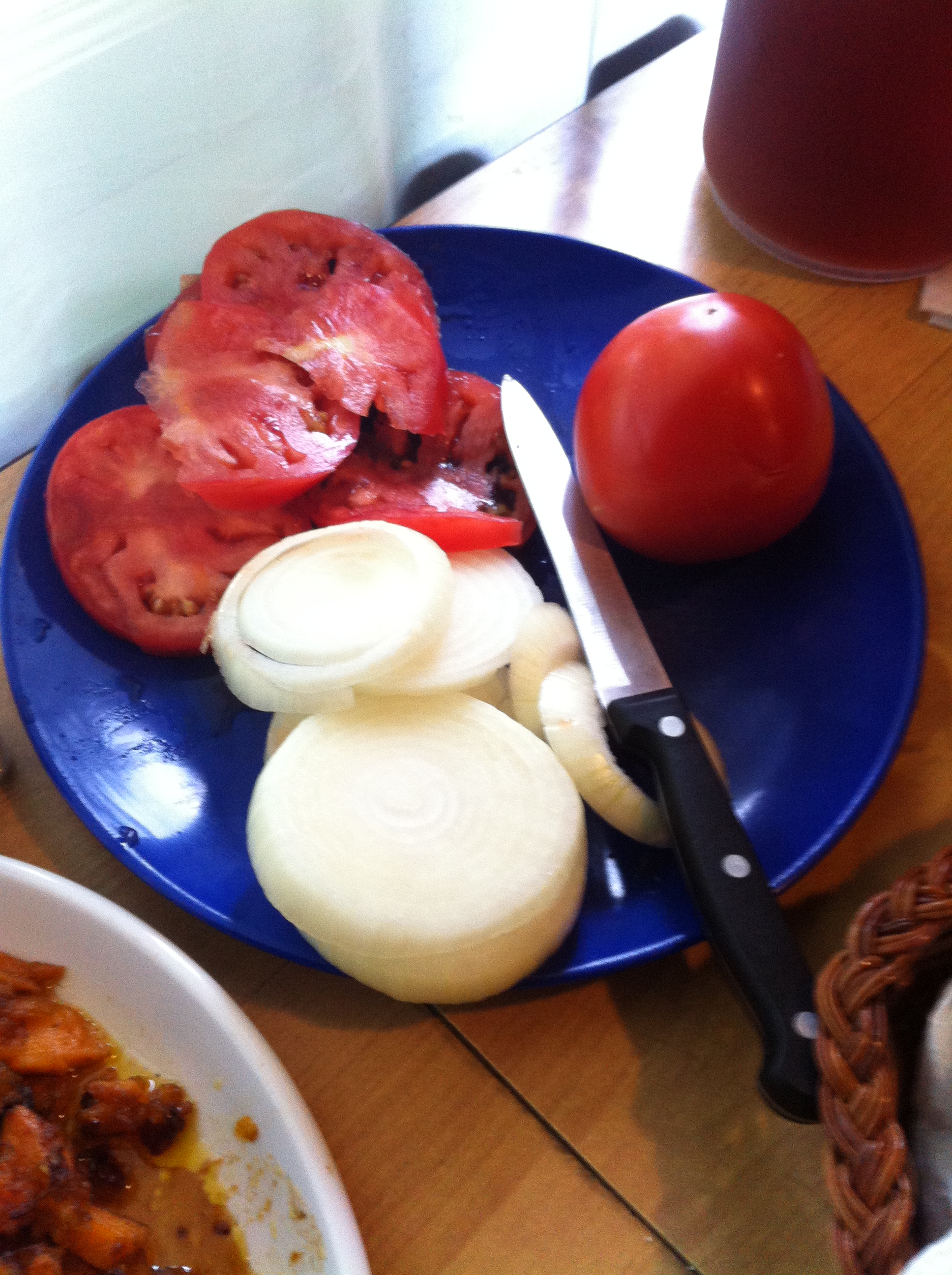
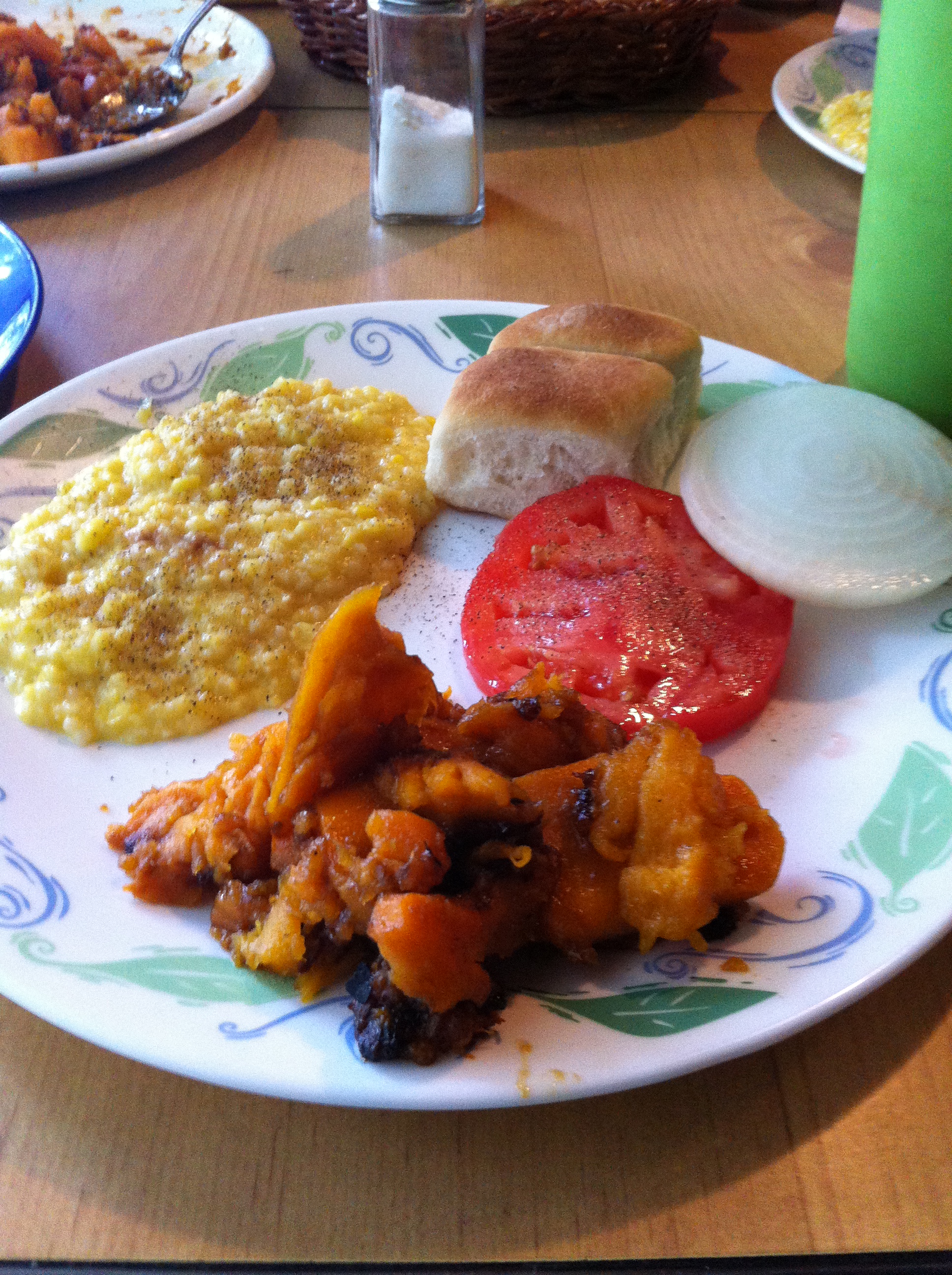
My favorite meal in the whole wide world consists of 1.) my dad’s creamed yellow corn. 2.) My mom’s fried sweet potatoes. 3.) A tomato and an onion.
The corn is scraped, raw, from the cob and meticulously cooked stove top, stirring constantly to keep it from scorching. It has the taste of heaven.
These sweet potatoes look a little burnt, and they should. That gives them the carmelized flavor. Cooked in a large cast iron pan, there’s nothing better. One stick butter, one cup sugar, sliced sweet potatoes. Orange joy.
Oh. My. Goodness. Thank you, Jesus.
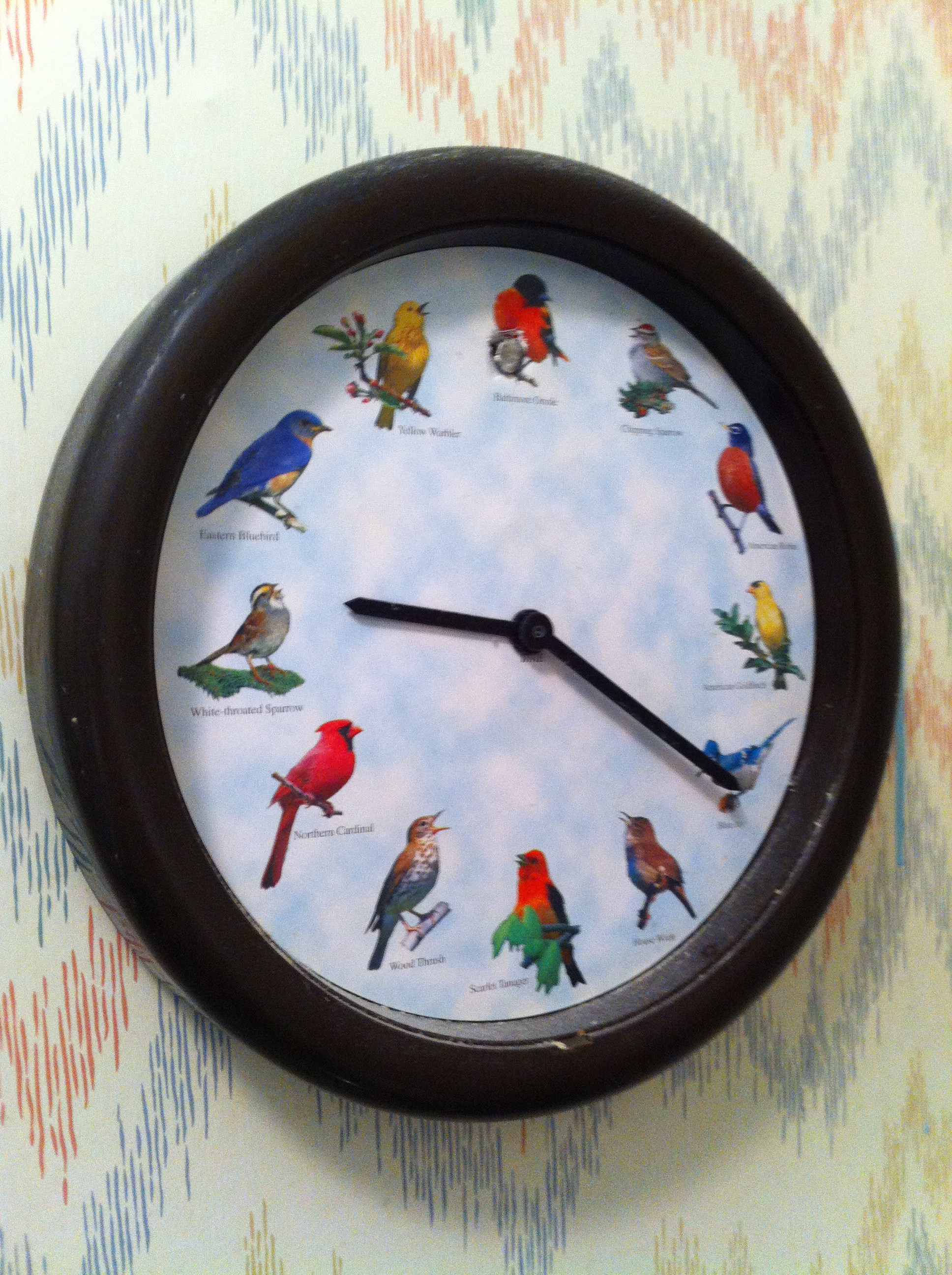
2. The bird clock in my parents’ bathroom.
I like it best when the batteries get old, and the hourly bird calls become eerily elongated.
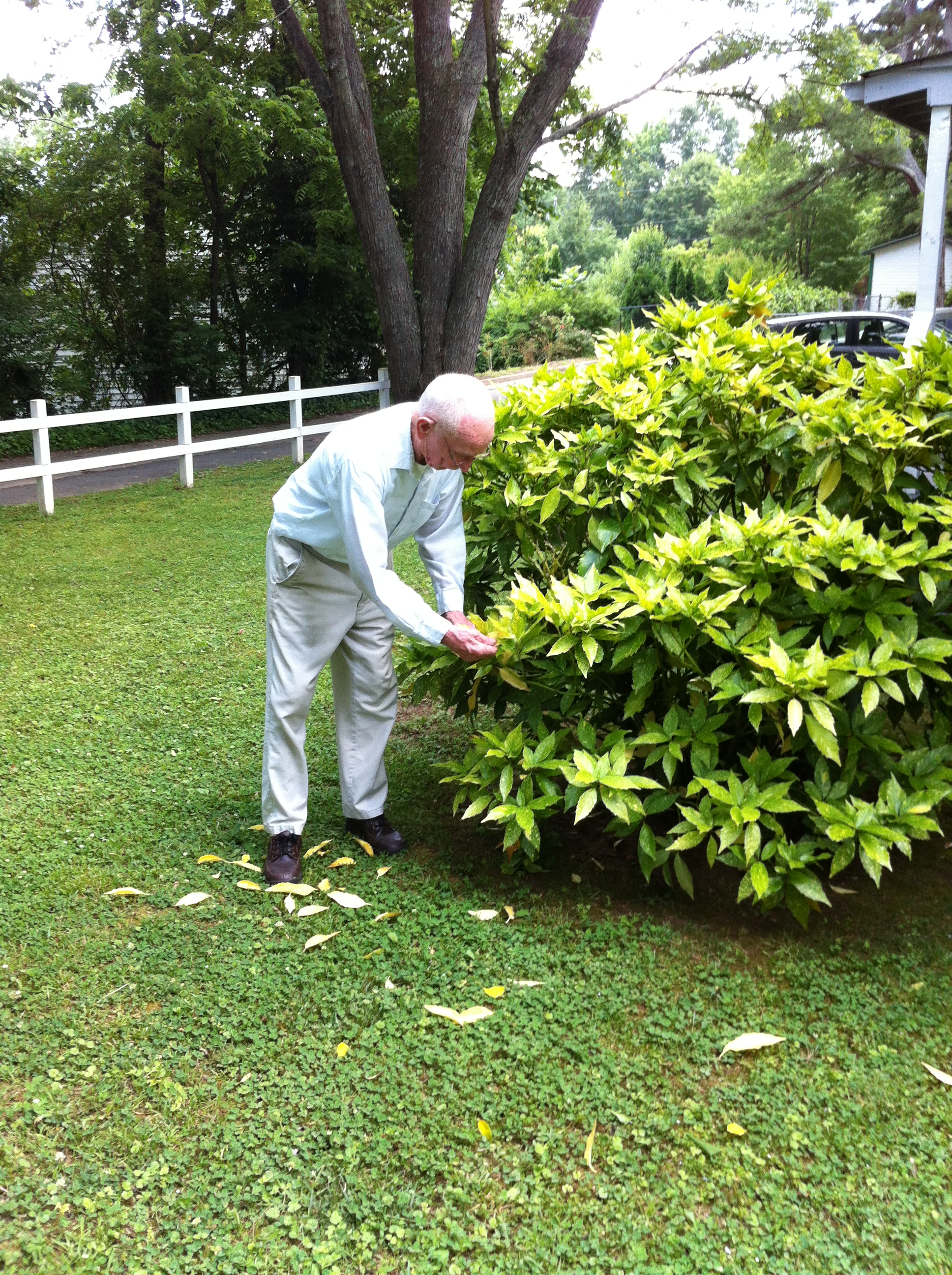
3. Walking around my folks’ small house (which my dad built BY HAND 34 years ago), looking at the bushes and trees.
4. Eating supper at Cracker Barrel. During the meal a very overweight but jolly lady came over to our table and said to my mom, “Honey, can I give you a hug? You remind me so much of my little grandma.” “Why, of course!” Mama replied.
“”Our hugs come in twos,” my dad said with a laugh. And then was amply rewarded.
I thought about saying, “What about me? Three’s company.” But my mouth was full of turnip greens and chow chow.
5. My mother repeatedly getting her supper choice, “eggs in the basket,” confused with a meal she had about forty years ago at IHOP called “pigs in a blanket.”
“Now what do you call this again, Neal?”
From the Cracker Barrel menu: Eggs in the Basket–Two slices of Sourdough Bread grilled with an egg in the middle of each, cooked to order and served with smoked sausage patties, turkey sausage patties or thick-sliced bacon and your choice of Fried Apples or Hashbrown Casserole.
6. Still at Cracker Barrel, as my dad stood in line at the counter paying (he INSISTED), another lady just finishing with paying her bill, saying to my dad, “Here, sir, let me pay for part of your meal with the rest of my gift card. Happy early Father’s Day?” And my dad, a bit confused at first, trying to PAY her for the gift card, before she finally hugged him and said, “No, no, I want to do this for you for an early Father’s Day present!” (While I stood over to the side between the pulled taffy and the Brad Paisley cd, unsuccessfully holding back laughter.)
As we finally left Cracker Barrel, my mom said to my dad, “You sure are hugging a lot of women today. I gotta get you out of this place.”
7. After loading mom’s walker in the trunk, and getting us all in the car, my mom, saying, “Tub, you should have asked that lady what days she usually eats at Cracker Barrel,” sending the three of us into giggles for two red lights, when I said to them, “I wonder if she would like to adopt us as her other family,” (which really wasn’t all that funny, but still got us roaring all over again, in the way you sometimes do when laughter is in the air.) Pulling off the Ball Ground exit from I-575, my dad said, “Those hugs were a pretty good way to spend an afternoon.” Because, of course, it was only 5:00 and we had already finished supper.
8. The feeling, even at my age, of being HOME.
9. The difficult but important discussion we had on this trip about what my mother would do if my dad died first.
“I just hope to goodness I go before Tub.”
“Now Neever (his version of Geneva), we can’t control those things.”
“What I really wish is that we could just go at the same time,” my mom said with total sincerity.
“Well, that might be possible,” my dad said with a twinkle in his eye, “the way I’ve been driving lately.” And we all laughed, at something so unfunny.
10. Experiencing irony as I was leaving Ball Ground the next day, stopping by a convenience store for a Yoo Hoo and a lottery ticket. The long-time teller printing out my ticket, as she mouthed, “straight to hell,” the lyrics of a country song blaring from the radio, and then handing me my Power Ball and saying, “You have a blessed day, sir!”
Each Monday morning, my former colleague Eric Nelson up the road at Georgia Southern University posts a poem on the departmental listserv. I love today’s. It feels a little “The Road Not Taken”-ish but with a twist of its own.
What If This Road
— by Sheenagh Pugh
What if this road, that has held no surprises
these many years, decided not to go
home after all; what if it could turn
left or right with no more ado
than a kite-tail? What if its tarry skin
were like a long, supple bolt of cloth,
that is shaken and rolled out, and takes
a new shape from the contours beneath?
And if it chose to lay itself down
in a new way; around a blind corner,
across hills you must climb without knowing
what’s on the other side; who would not hanker
to be going, at all risks? Who wants to know
a story’s end, or where a road will go?
— from What If This Roadand Other Poems (Gwasg Carreg Gwalch, 2003)
Here’s a post from back in 2014 about the power of a simple smile.
**********************
The students in my English 123 (Freshman Composition) classes at SCAD (Savannah College of Art and Design) are doing what I call Visual Essays in this, their next-to-the-last week of Fall Quarter 2014. We read two books this term, Paulo Coelho’s The Alchemist and Tal Ben-Shahar’s Happier, both relating to our course theme of “Happiness and the Exploration of Joy.” The Visual Essay project invites the students to MAKE, rather than write, their papers. Traditional essay requirements are still required: a focus and thesis, structure, detail and support, etc. But this essay morphs into a drawing or painting, a sculpture, a collage, a video, a food, etc. Basically this project is a visual representation of one topic narrowed into a clear thesis/perspective/idea. The challenge: how to “show” their thesis.
Debora Jacob (from Brazil) went to Forsyth Park here in Savannah last Saturday. Here’s her Visual Essay titled “Happiness Shared” on the topic of the smile and its significance.
Here’s an old post from my blog back in 2014, when I was semi-retired, teaching as an adjunct at Savannah College of Art and Design. I recently looked at it as 2022 made its way into our lives. May these questions be an encouragement to you.
**************
This past fall term at SCAD (the Savannah College of Art and Design), where I teach composition to international students, my course topic was Happiness Studies.
Each week, I introduced a new question, which I told the students had the potential to make them happier–IF they took the time to ask and then answer the question.
Here are the ten questions. I challenge you to ask them to yourself whenever you need a dose of joy.
Dr. Saye’s Top Ten Happiness Questions
1. Just how important is it?
2. Do I realize that I can choose to think a thought that feels better?
3. Why do I sometimes try to control other people? That’s really not my job.
4. What do I see RIGHT NOW that is beautiful?
5. Who has helped me recently?
6. What is a good holiday memory?
7. What do I really, really love?
8. Do I realize that I can take three deep breaths right now and center myself? My breath is my life.
9. Who can I be a blessing to in the next hour or so? How can I do that?
10. Am I paying attention to NOW (and not wasting time regretting the past or worrying about the future)?
I encourage you to print these questions, put them up some place where you can easily see them, and start asking.
I can still remember so very vividly this difficult but meaningful chance encounter one evening in downtown Savannah years ago.
*********************************
Touch
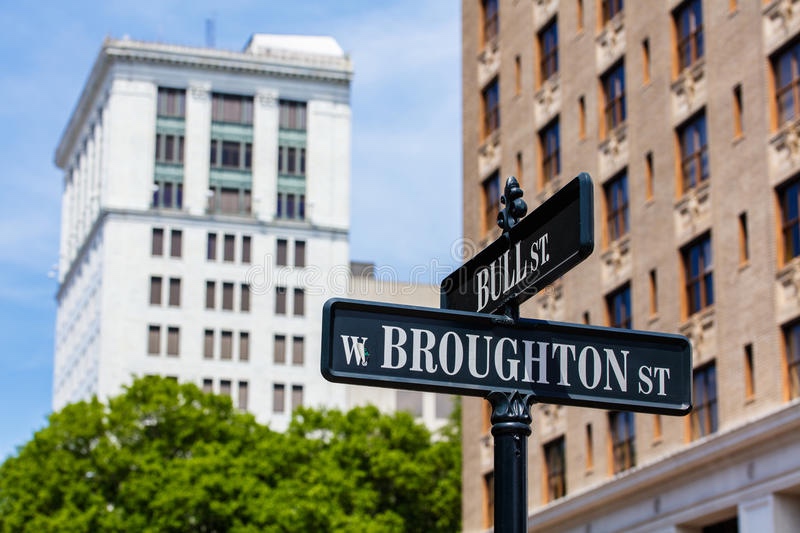
Savannah’s Broughton Street bustles with activity this past Friday night, even for a warm and gorgeous early spring evening. I suppose Broughton is as close as my quirky, Midnight City gets to having a normal Main Street, as the historic district snakes around twenty-two breathtakingly beautiful squares. (Savannah’s downtown area is unique and hard to describe–come visit us to see what I mean.)
My friend Robert and I venture to the Crystal Beer Parlor, share joyful banter with lovely Hostess Fifi, meet good buddies, consume delicious and perfectly prepared ribeye steak. Friday night joy. Next, Broughton Street Market and dream-laden lottery tickets. Walking toward my car. Traverse past hip young couples pushing into dance clubs; midde-agers brandishing bags with Paula Deen leftovers; older folks leaving Savannah Music Festival venues; SCAD kids with blue hair waving in the breeze. Packed, noisy sidewalks. All well. Very well. Blessed.
Then fate interrupts–as she often does.
They sit on the sidewalk. No sprawl. As if dumped there. Three young men, in their early twenties. Two dogs. Man and pet, dirty, smelly, retched. Outcasts from society. A block from McDonald’s.
I live downtown and have grown immune to the homeless, the beggars, the street people. They merge and melt into the old bricks, the azaleas, the wooden benches. So what if there is an occasional grocery cart on its side in the shadows? No big deal. It happens.
But then the soiled speak.
“Can you guys help us out? We’re hungry.” Honesty makes me tell you my reaction: No Reaction. Walking on. Past the dirty ones.
Then Robert turns, and says, “I can’t give you money, but I can buy you some food.”
Why do I hang out with people like Robert? It’s so much easier to keep walking. Walking past. Walking toward. Past what I don’t want to see, acknowledge. Walking toward the known, the comfortable.
“What are you doing?” I quietly ask Robert, a bit frustrated.
“Getting them something to eat,” he says matter-of-factly.
I try but can’t think of a real reason to stop this interruption of my previously perfect night.
Too late, already inside McDonald’s, I remember a possible reason to have kept walking, a religious reason even: didn’t Jesus say that we would always have the poor with us?
But Robert, reasonless, places the order.
Five minutes later, with a bag of burgers and a tray of dollar menu sweet teas, we walk back toward the vagabonds. One young guy, with his mouth inexplicably sucking on the side of a smoking soda can, with pierced nose tattooed in triplicate black dots along the bridge, stands up in dryrotted pants that touch bony, bare knees. Drunk. Or high. Or both.
I hold out the bag of burgers. Away from my body, and toward his. Embarrassed. He reaches towards the food and plops back down.
Another, apparently the leader and spokesperson, looks up at me and says, “Man, you guys are beautiful. I gotta stand up and thank you. That’s a cool jacket.”
I want to be anywhere, anywhere but here.
He starts to stand, and then reaches out to hug me, drunkenly. But pauses, perhaps sensing my hesitancy.
I then see his eyes.
And my safe Savannah world shatters.
For his eyes are the eyes of a real boy. A boy with a mama and a daddy somewhere. A boy who used to be a baby.
“Where are you guys from?” I ask, shakily, terrified but now connected. Joined. Level.
“San Francisco, long way from home,” he replies.
And then my knowing comes: his eyes could be the eyes of my daughters. The eyes of my grandchildren.
Without thinking, I reach out and touch his scraggly face and hold it for a moment. I see him. Time freezes. I really see him. He sees me, I think.
“If this was reversed, I’d do this for you, man,” he says haltingly, taking his place back down on the sidewalk, back down to his low place.
Robert and I walk away.
Less than two blocks later, I feel tears on my face.
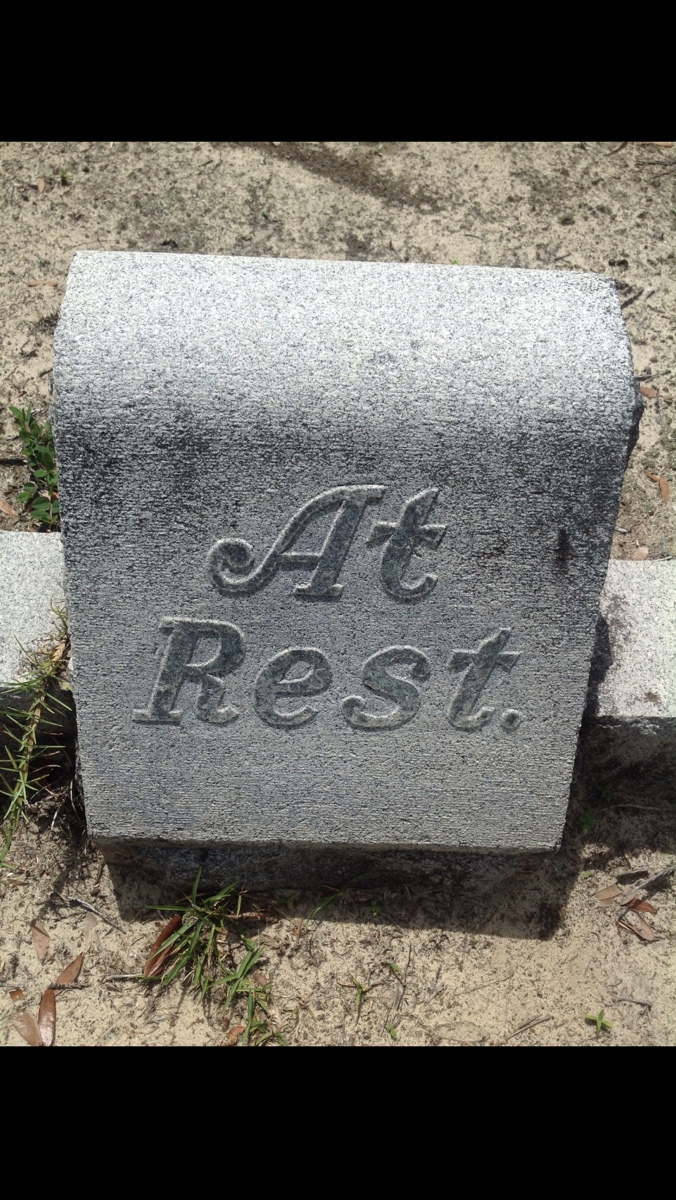
I have always Loved, Respected and even been a bit Intimidated by the dual seriousness and joyfulness of cemeteries: those quiet repositories of yesteryear, of love, of memory, of laughter and tears, of regret, of layered history.
Here’s a post I did back in 2013 about perhaps Savannah’s most iconic cemetery.
************
I spent an incredibly warm but wonderfully interesting couple of hours this afternoon at the historically magnificent Bonaventure Cemetery here in my beautiful Savannah. The day might have been heavy and muggy, but my time there was anything but. Every second Sunday the Bonaventure Historical Society offers free guided tours of the cemetery, so I showed up thirty minutes early with a big water bottle and wearing my thinnest t-shirt.
Before leaving my air conditioning, I checked out the cemetery’s website and learned that …
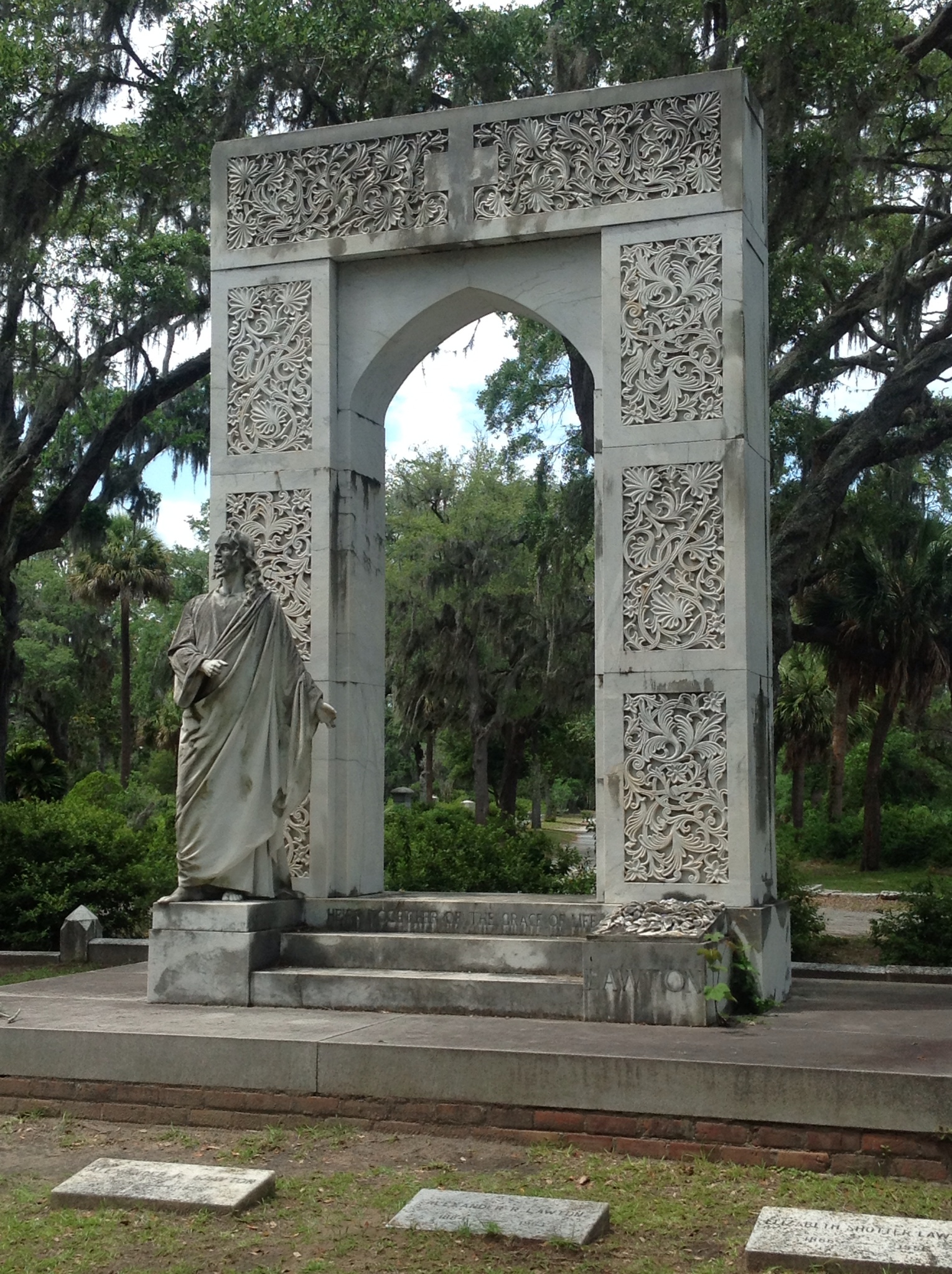
Though not Savannah’s oldest cemetery, Bonaventure is certainly its most famous and hauntingly beautiful. Quintessentially Southern Gothic, it has captured the imaginations of writers, poets, naturalists, photographers and filmmakers for more than 150 years. Part natural cathedral, part sculptural garden, Bonaventure transcends time.
Military generals, poet Conrad Aiken, Academy Award-winning lyricist Johnny Mercer and Georgia’s first governor Edward Telfair are among those buried at Bonaventure. The approximately 100-acre cemetery is also historically significant as a reflection of changing views on death and dying in the Victorian era. As death became more romanticized and ritualized during this period, cemeteries became lush, beautiful “cities of the dead.”
Another reason behind Bonaventure’s popularity is John Berendt’s book, Midnight in the Garden of Good and Evil, which featured a cover photo of the now-famous “Bird Girl” statue, formerly located in Bonaventure. The statue has since been moved to the Telfair Museum of Art, founded through the bequest of Mary Telfair, also buried at Bonaventure.
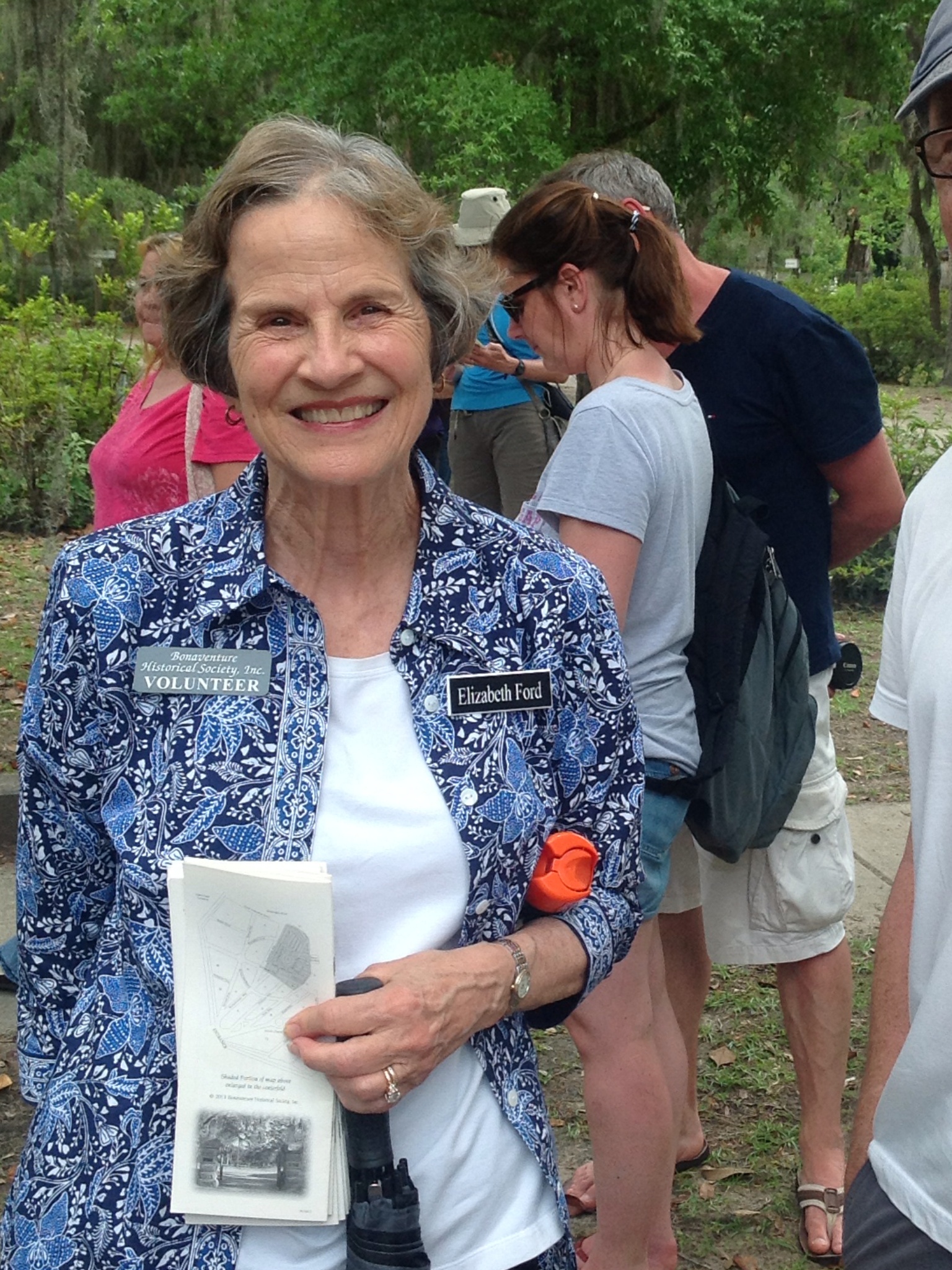
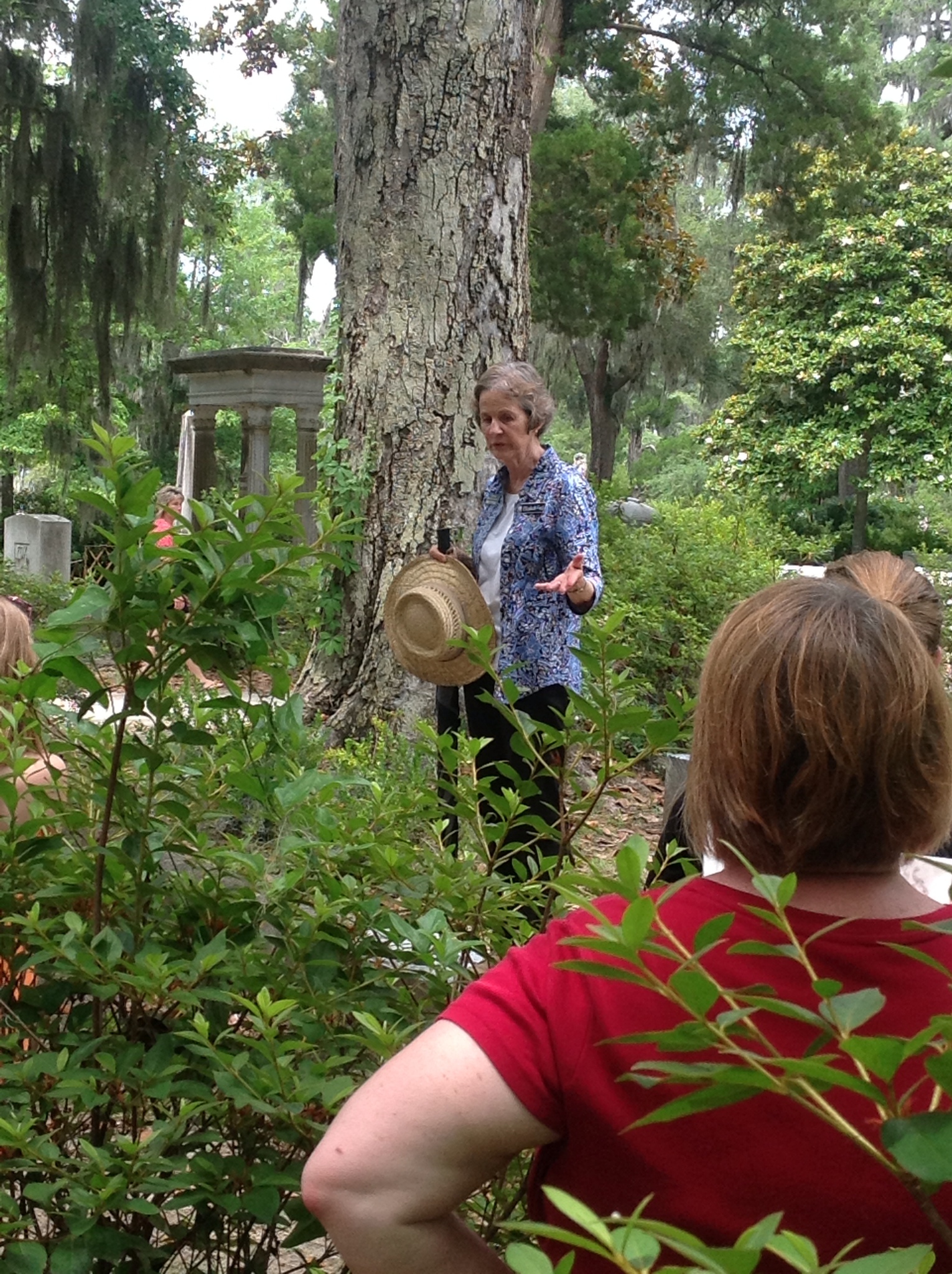
Our tour guide, the vivacious Ms. Elizabeth Ford …
… oozed Southern hospitality and a spoke a delicious Southern dialect. (After the tour, I wanted to go home with her just to hear her talk some more. But I didn’t really know how to ask.)
Elizabeth led us around the hauntingly beautiful Gothic graveyard, along the banks of the lazy Wilmington River, regaling us with stories of the history of the place and showing us gravesites of some of the more prominent folks buried there. But what I loved most of all was the simple interplay of a deeply Southern voice leading me, slowly, on Sunday afternoon time, through such beauty.
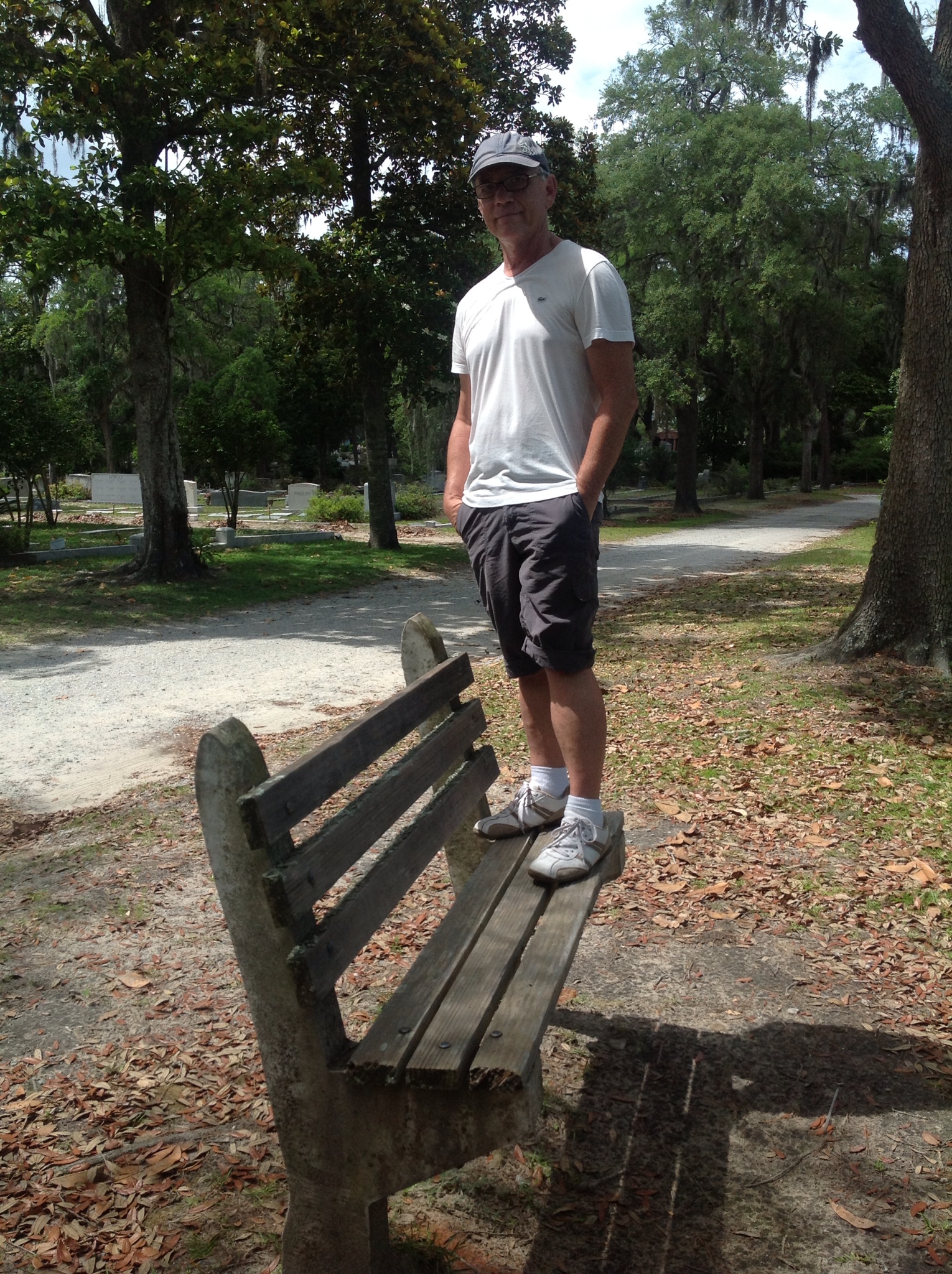
(In the above pic, I was aiming for a cemetery facial expression.)
(I wish I had a ponytail like that guy to my left.)
My parents taught me to love cemeteries. As friendly places, reservoirs of wonderful memories. To this day, when I return home to visit them, we usually end up at one of several cemeteries in or around my hometown of Ball Ground, Georgia, where close relatives are buried. Granny Nix and Veto. Mama and Papa Saye. My brother Jimmy who lived only one week. Old Doc Saye, Ball Ground’s first doctor. Pulling weeds around a headstone, or straightening flower arrangements, we get caught up in “Remember when’s” and “She was a pistol!” and “I still miss him so much.” They taught me that I am standing tall today because of all of them who came before.























 NealEnJoy