I know it’s cheesy, but it’s true. HR and I love our somewhat regular escapes up to the Big Apple. And we’ve had a marvelous time on this trip.

I know it’s cheesy, but it’s true. HR and I love our somewhat regular escapes up to the Big Apple. And we’ve had a marvelous time on this trip.
Daily nerdy notes on our New York getaway.
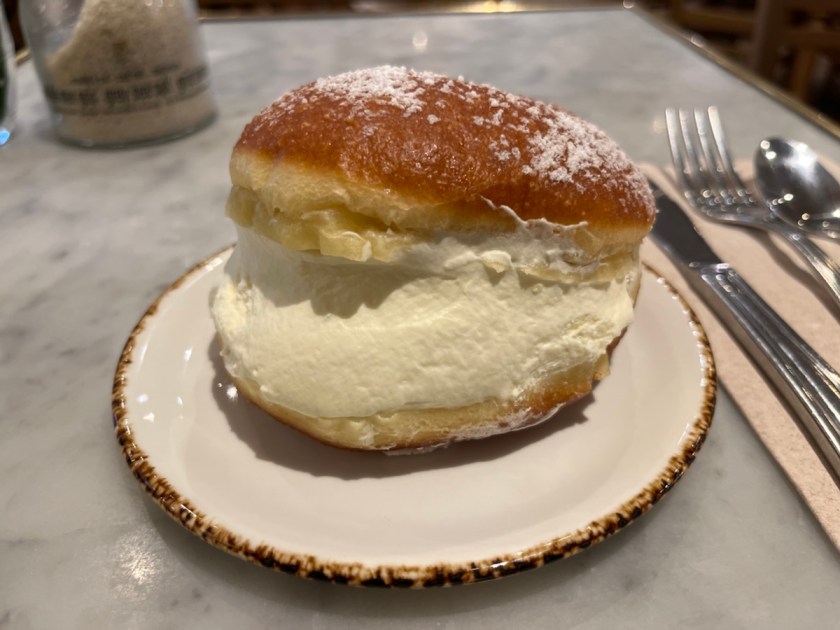
French Crème Donut and coffee for a beautiful quick breakfast.

In an attempt to see just how embarrassingly touristy two people from Savannah can get, Robert and I hopped on the Roosevelt Island Tram and headed over to Roosevelt Island.




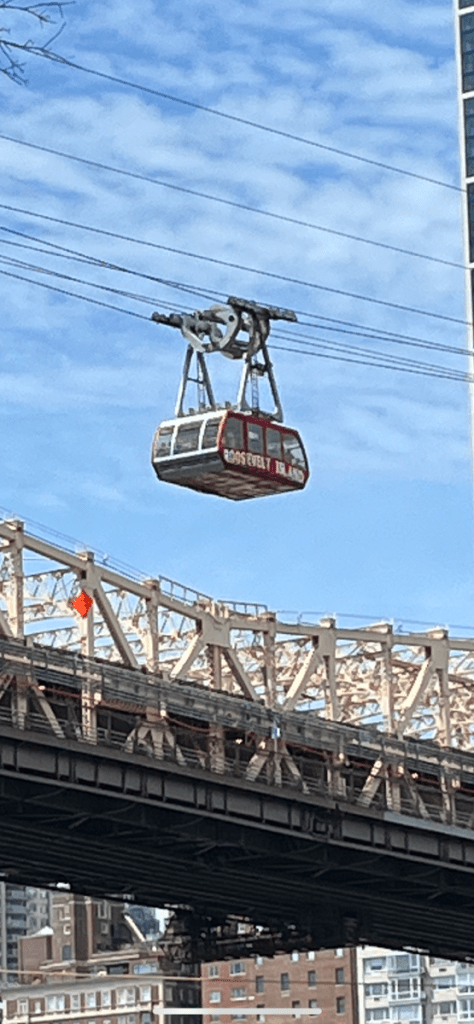
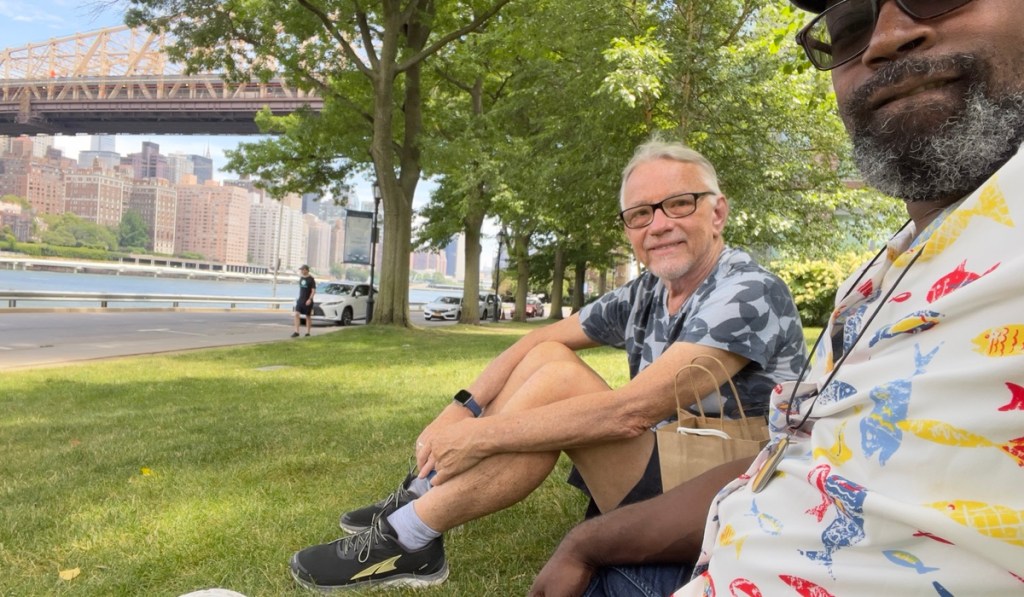
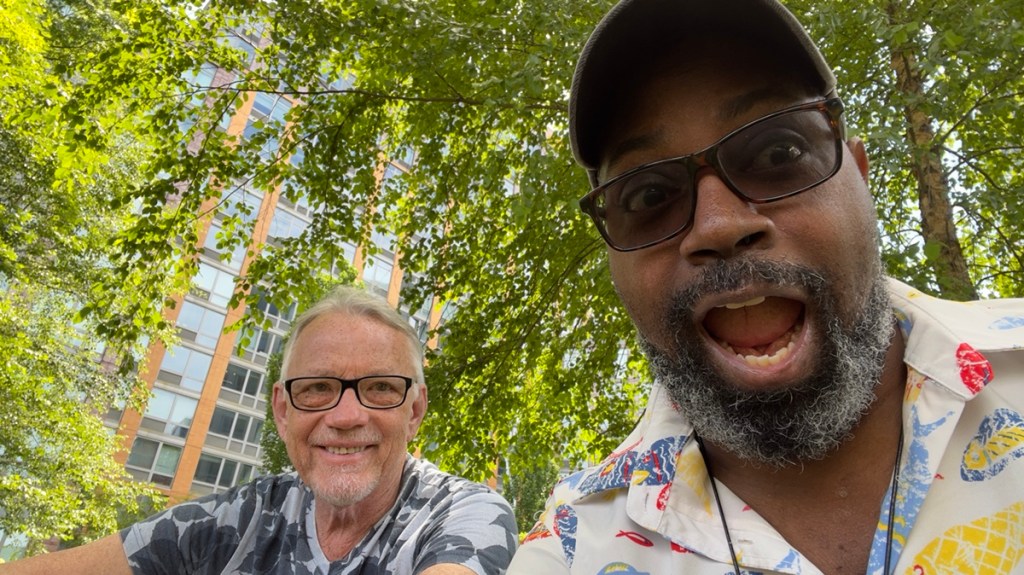
And enjoyed the greenery beside the East River.


Daily nerdy notes on our New York getaway.
Robert and I opted for a tiny breakfast at Carnegie Diner to start off our day today …
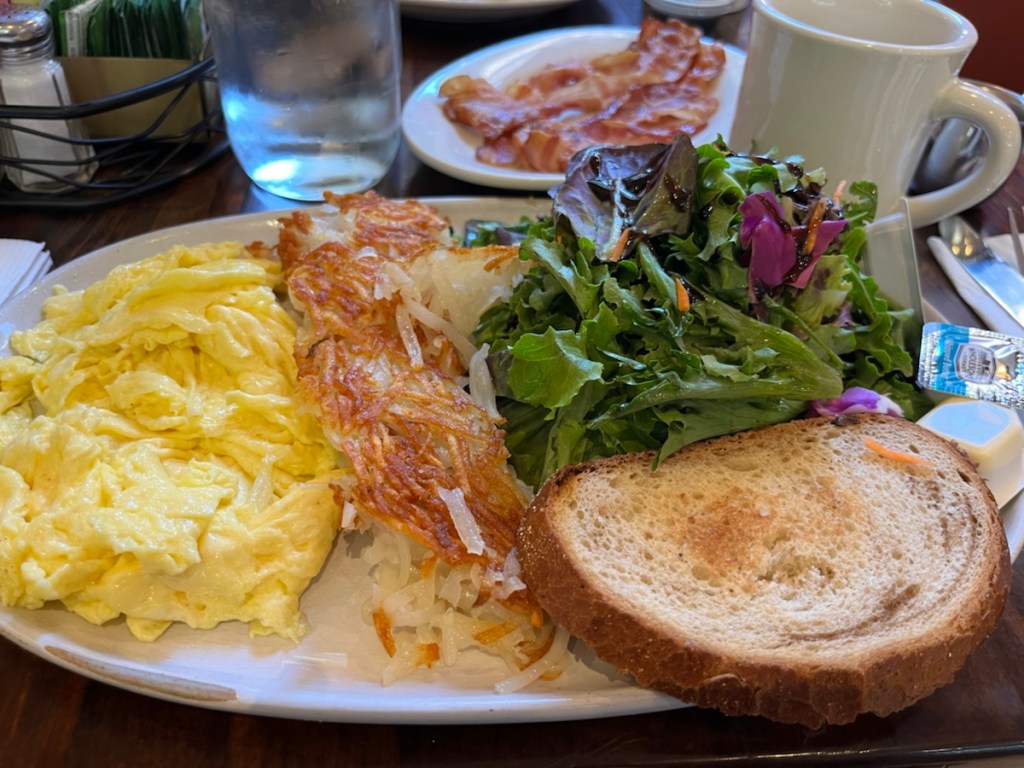
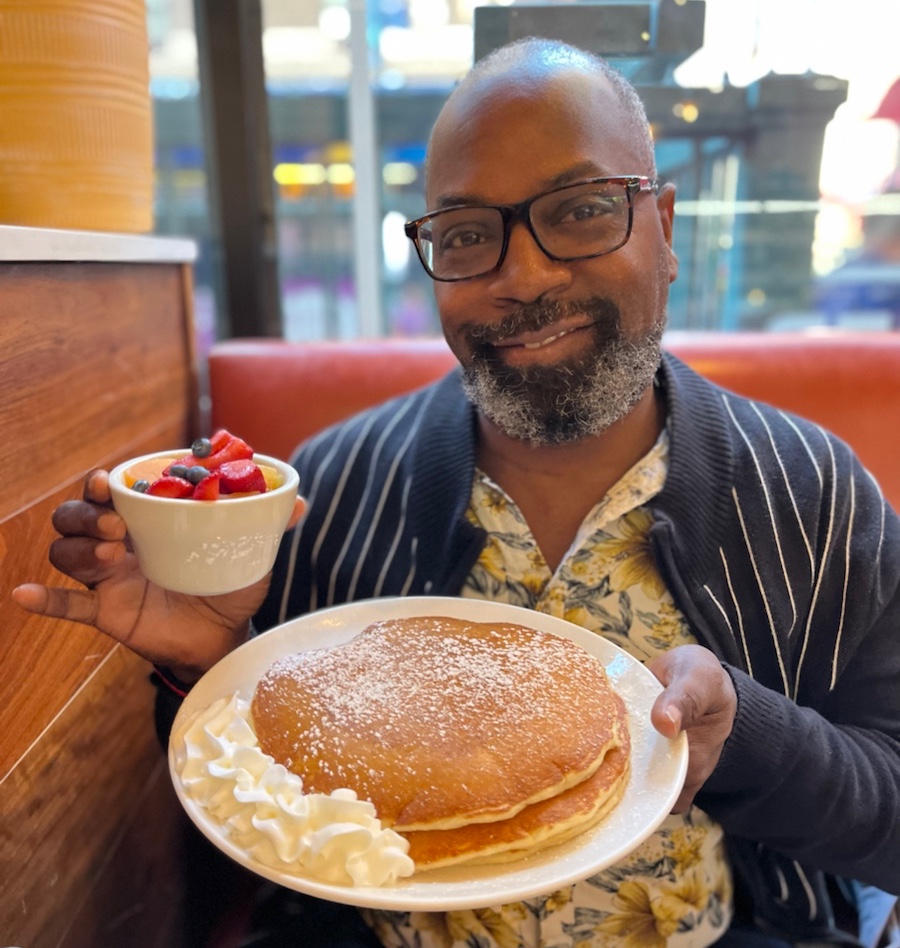
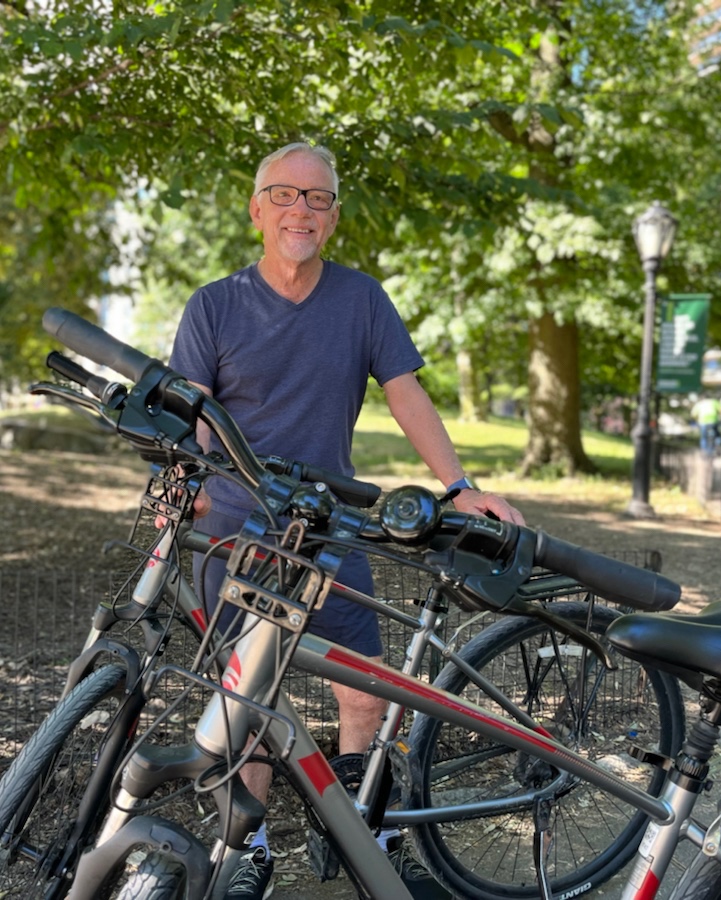
Then a 10 kilometer bike ride around Central Park to burn off some of the calories.


Then I forced a somewhat disinterested HR to walk over and look at my dream NY condo.

In case anyone wants to buy it for me as an early Christmas gift, or even for National Watermelon Day (August 3), it’s the Plaza Tower on 60th Street east of the park.
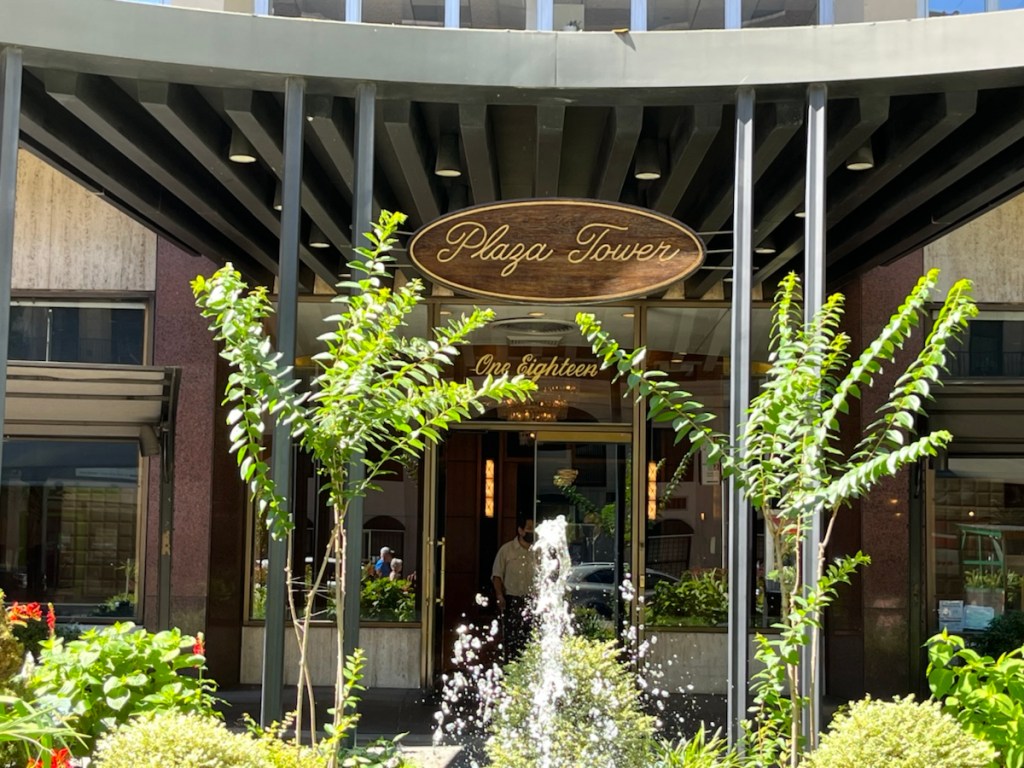
I prefer the bigger middle-balcony apartments (see below), but I guess I would settle for the smaller balcony to the left or right, if that’s all you can really afford. But maybe you could simply work on your budget a little to free up some cash. Do you really need to eat out so often? Home cooked food is cheaper and healthier. And what’s wrong with your children wearing hand-me-downs? They need to learn about not always having to get the “best of everything.” And Goodwill has some really nice stuff, like everything you need—pots, pans, dishes, books, old electronics, furniture and hammers. It would be a win-win situation.
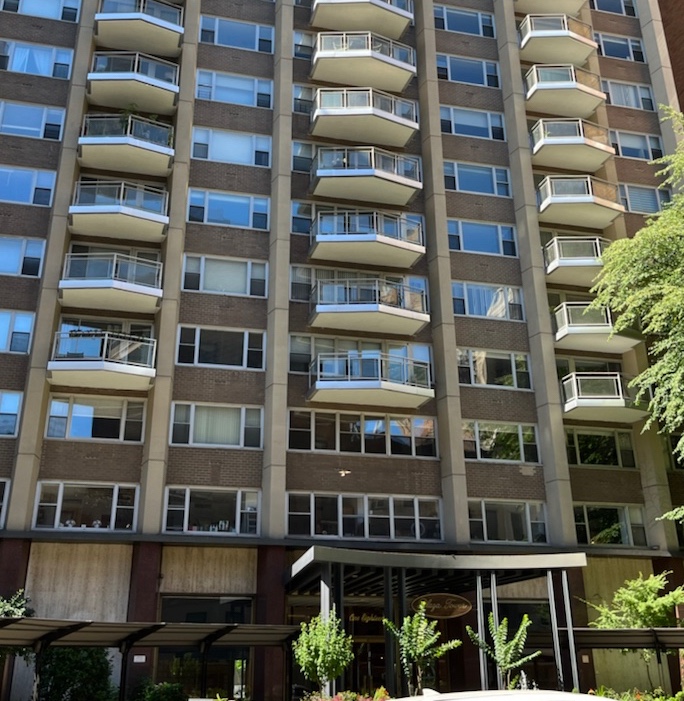
Then Robert rudely forced me away from where I was respectfully peering into a lower-level window just so he could go back to the hotel and … take a nap, of all things! IN THE CITY THAT NEVER SLEEPS.
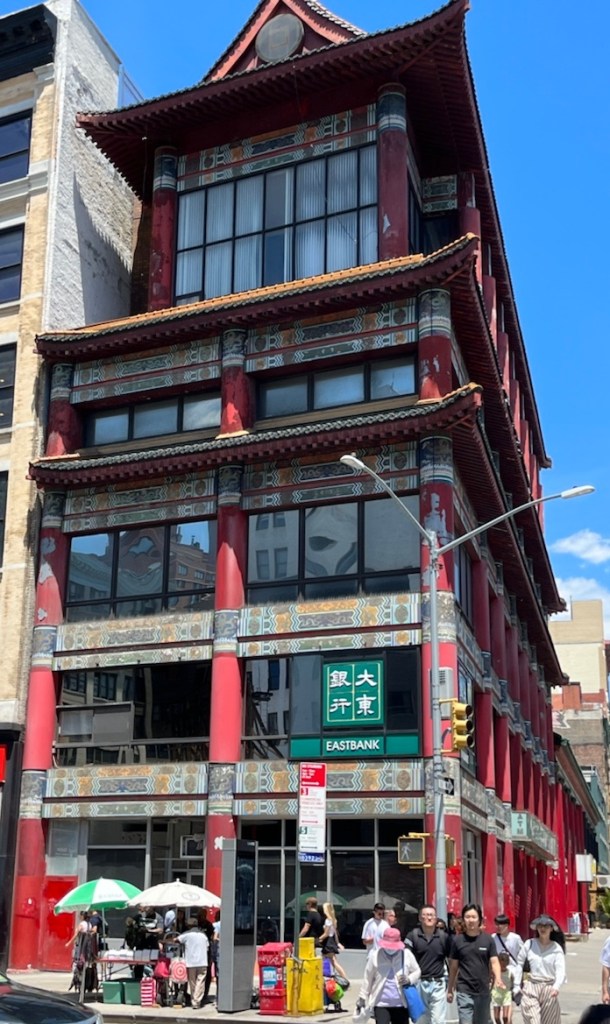
After HR got his rest on, and I made lists of what I would bring from Savannah to put in the new condo, we subwayed down to Chinatown for lunch at our fav restaurant there. But lo and behold, there was an hour wait at Hop Kee, so we found another little place on a side street—The Taiwan Pork Chip House.

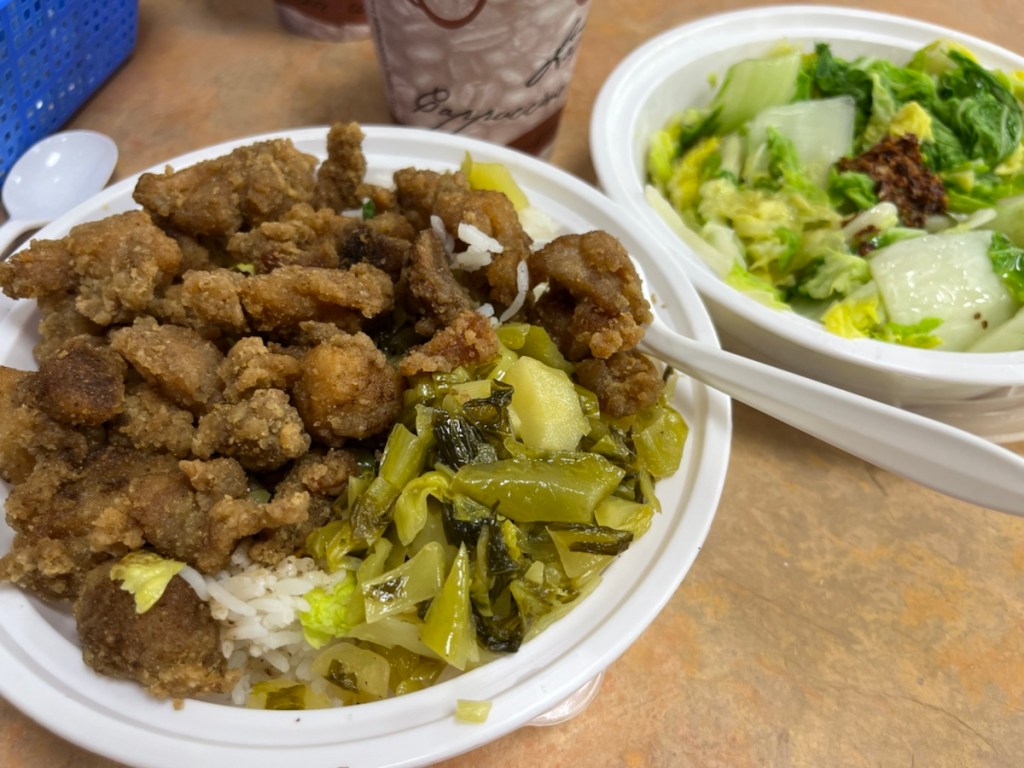
So good! I got the salt and pepper chicken with scalded vegetables. I didn’t pay enough attention to see what Robert got. But here’s what it looked like.

We love Chinatown!


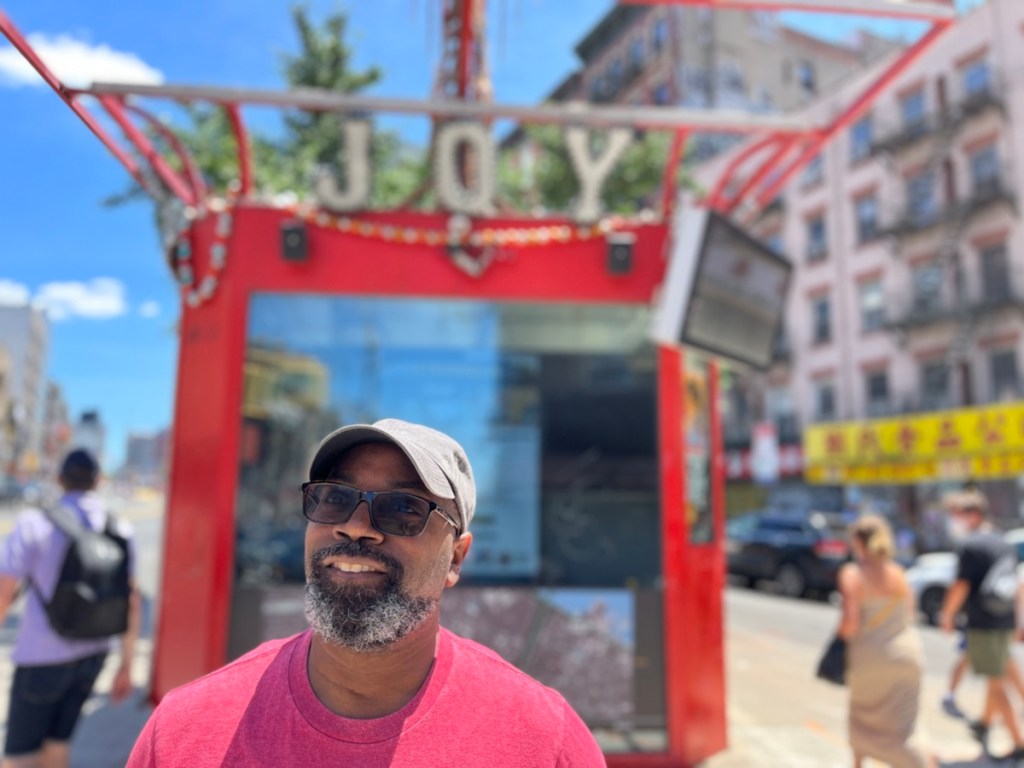
We only have one more day in Manhattan, so if you plan to join us, you need to come on up.
Daily nerdy notes on our New York getaway.
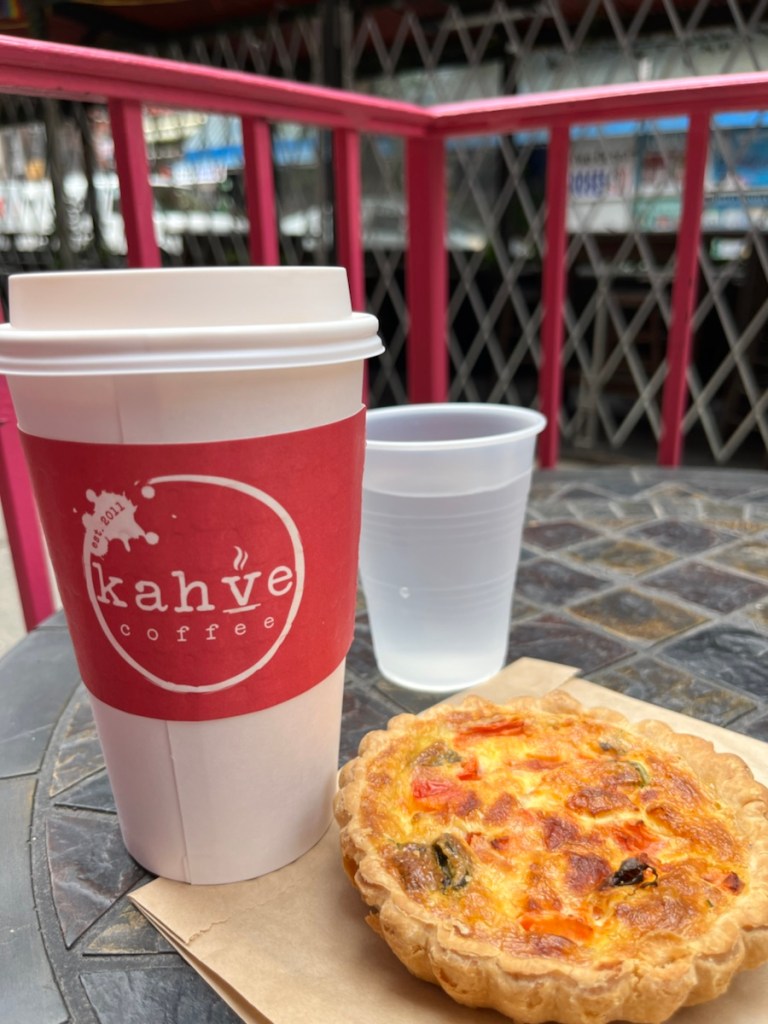
I’m very picky about my coffee, basically thinking that all coffee EXCEPT DUNKIN’ DONUTS tastes like black ashes in hot water. So I was very pleasantly surprised when I discovered the cute little, gay-owned coffee shop, Kahve in Hell’s Kitchen close to our hotel.

The coffee was delicious!

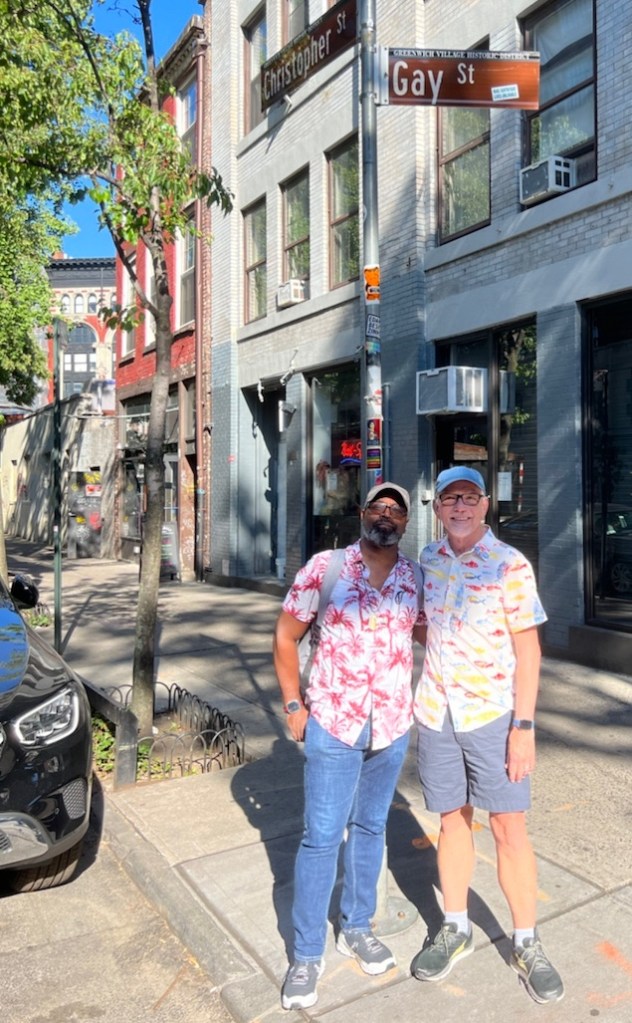
Robert and I signed up for a Gay Pride Tour here in New York. We were to meet at Christopher Park in Greenwich Village near the iconic Stonewall Inn (arguably the birthplace of the gay rights movement).
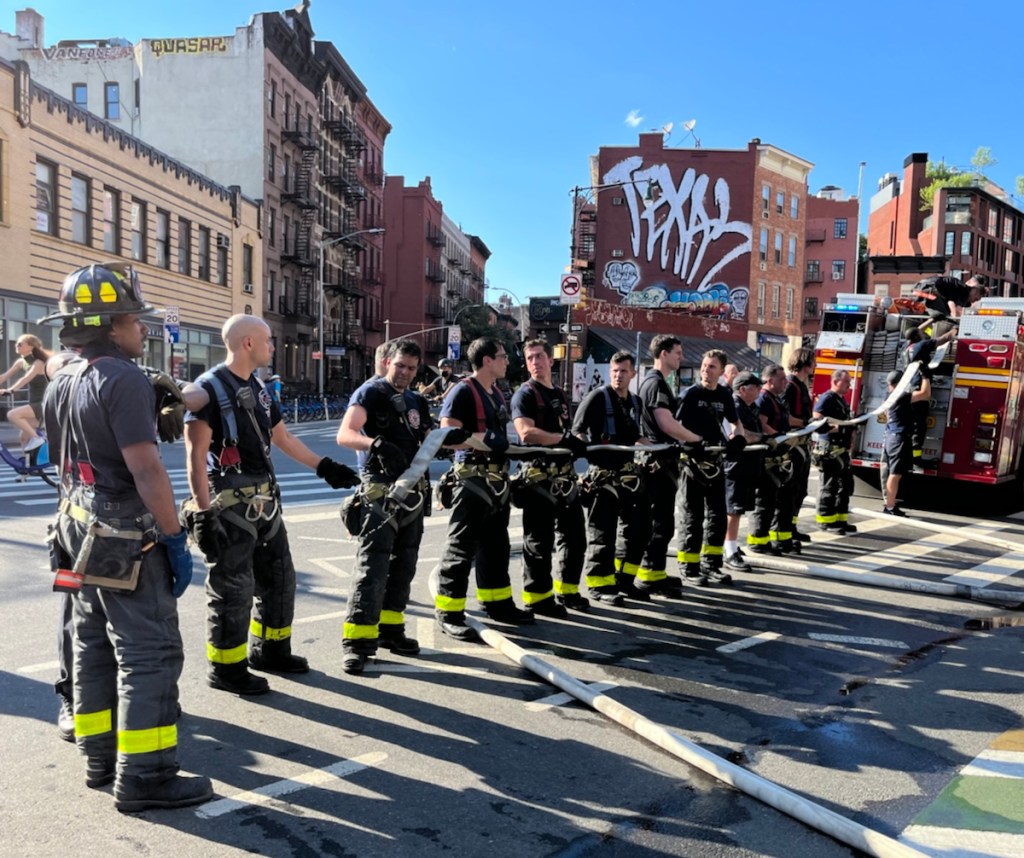
We arrived a bit early. Stood in the tiny park for a while. Then heard two loud explosions and saw black smoke billowing from the apartment building next to the Stonewall!


We watched as the frazzled residents were rushed out of the building, and the fire engines loudly arrived.
Well, this is New York, so our plucky guide Joe went on with the tour for HR, a handful of friendly folks from the UK and me.

Thankfully the fire was extinguished, and the firemen put away the hoses.
What a smokin’ tour!

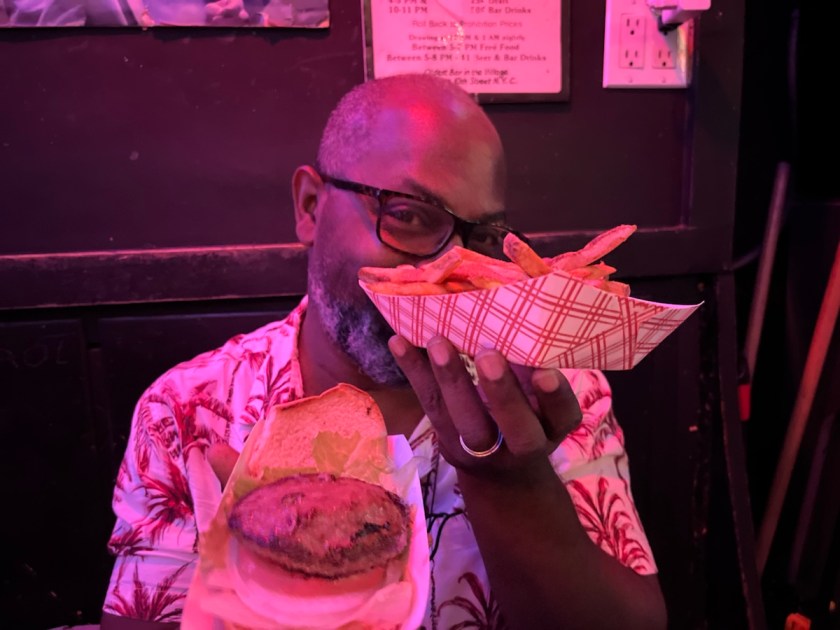
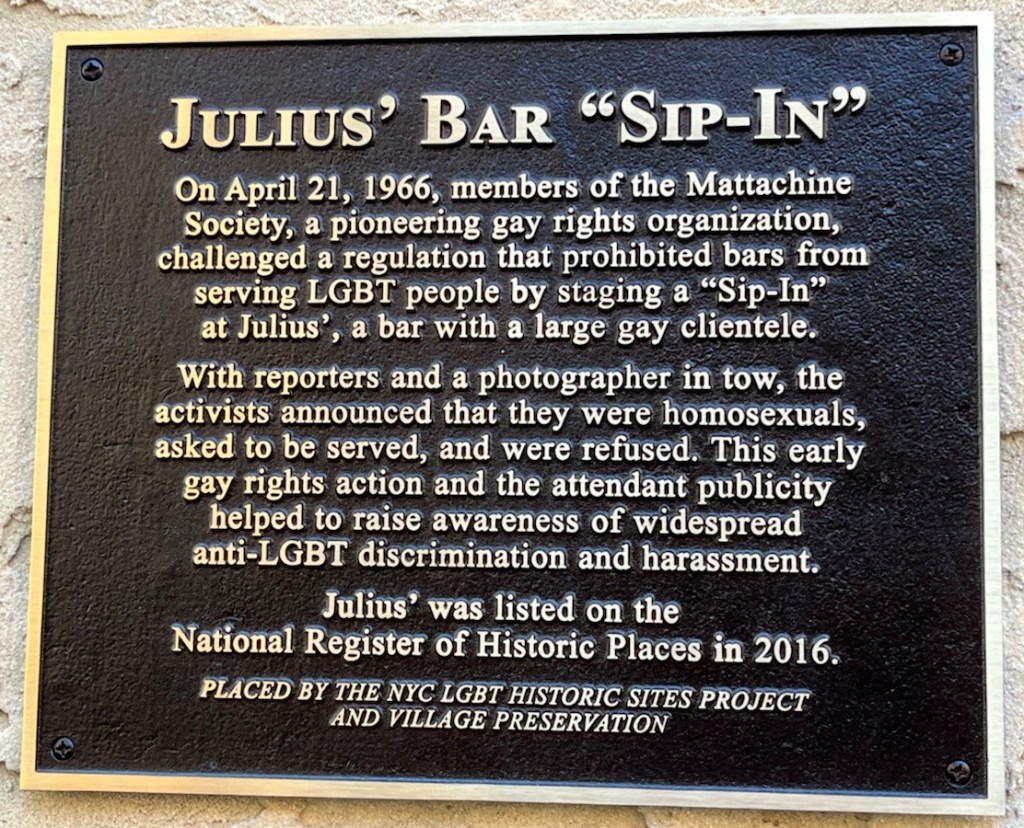
Well, the tour and the fire left us hungry and thirsty. so we headed to Julius, New York’s oldest gay bar, for incredible burgers and a pint.


Julius was the site of the “Sip-ins” of the 1960’s, fashioned after the Sit-ins of the Civil Rights movement. Gay folks went to bars, said they were homosexuals and were refused service, leading to widespread awareness of LGBTQ discrimination-and eventual changes in the laws.

What a fiery gay day we had!

Daily nerdy notes on our New York getaway.
Seeing Broadway’s ”Company” with Patti Lapone.
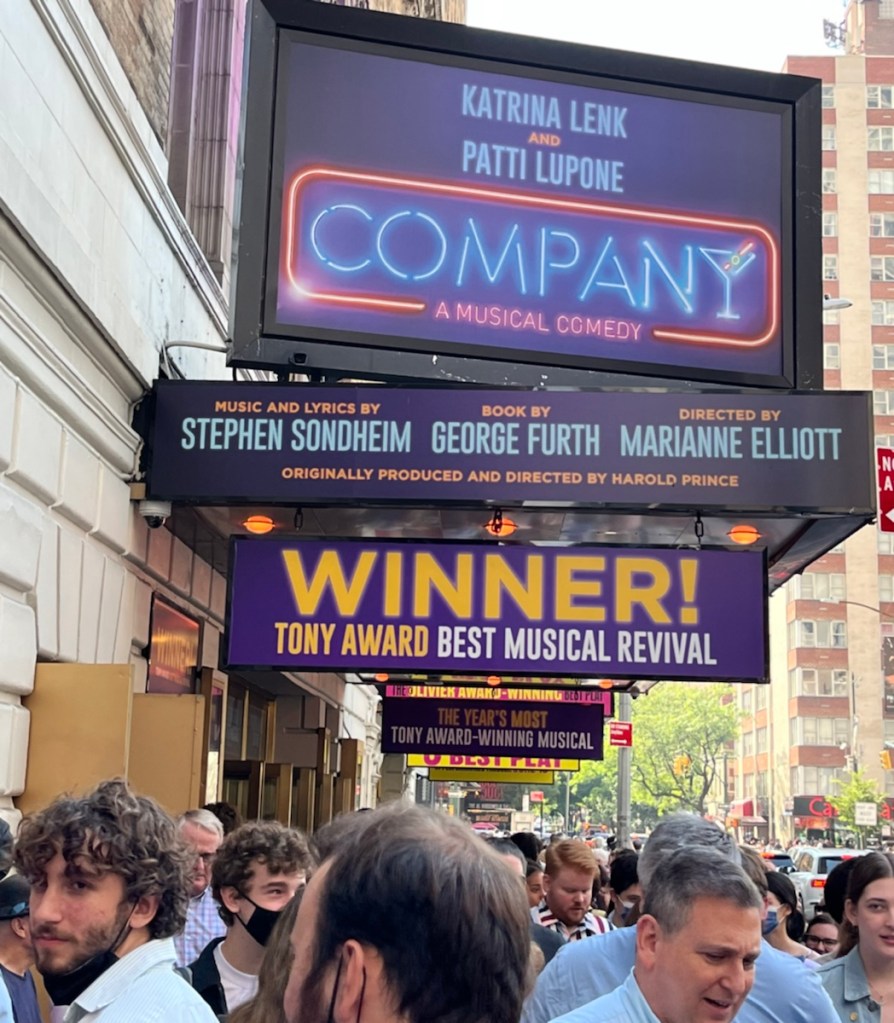
Oh. My. Goodness. One of my top five Broadway musicals I’ve ever seen. (Well, I am gay.) All about the crazy expectations we heap upon relationships. (Don’t get HR started.)
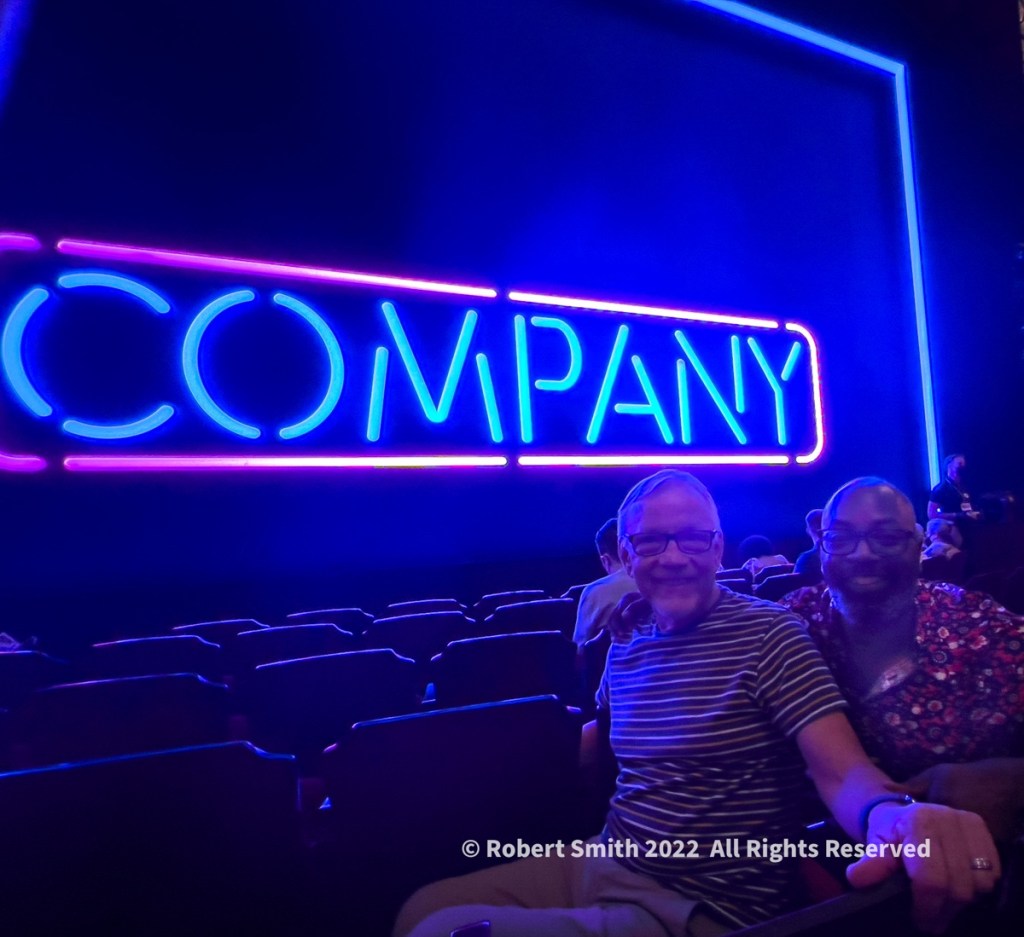
After the play, here’s Robert embarrassingly trying to convince me that he could make it in NY as a Radio City Music Hall Rockette.
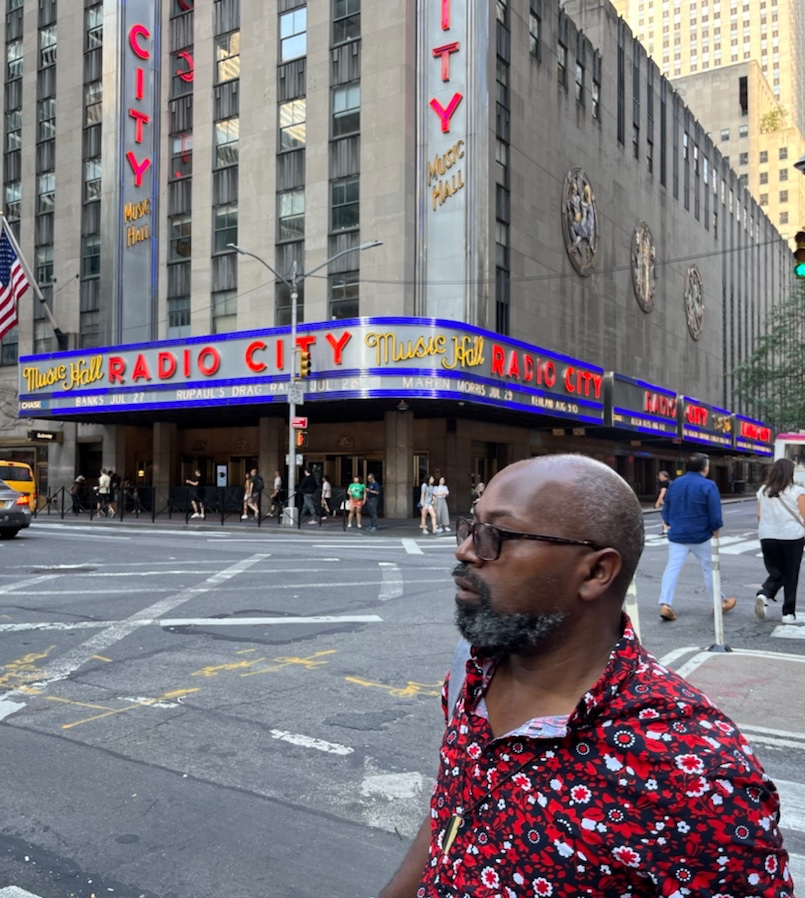
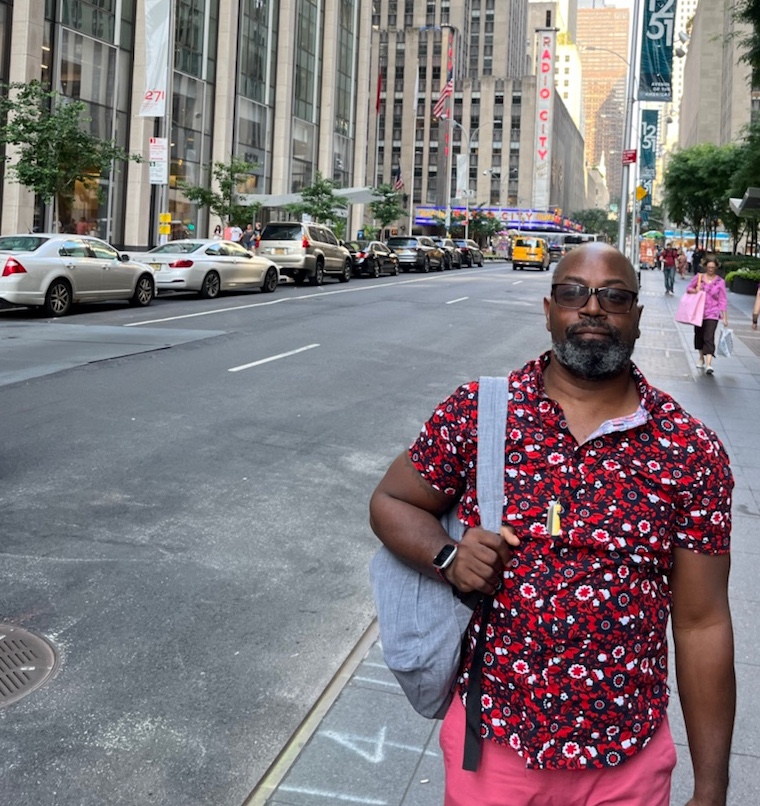
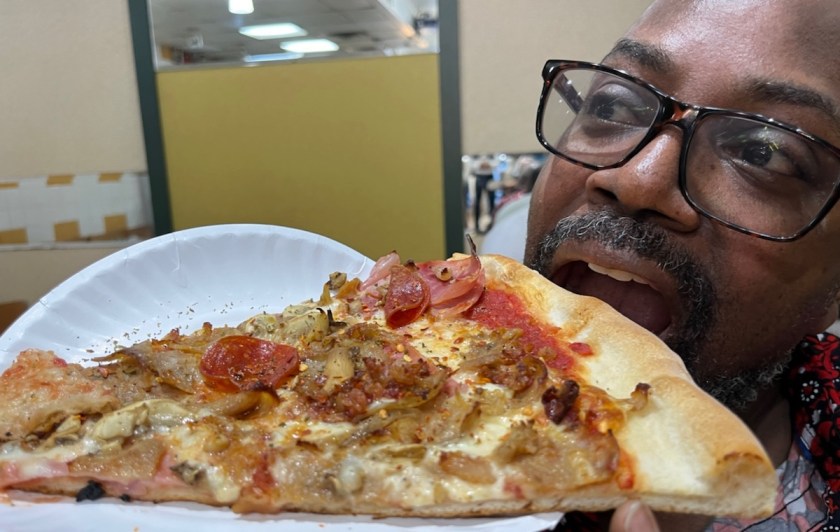
I finally caught up with HR and calmed him down with some New York pizza. (Pizza always works.)


But just between us, let’s be honest, HR simply couldn’t do those strut kicks.


Daily nerdy notes on our New York getaway.
Robert and I are in Manhattan for a few days. But before that, we were all cool and hip up in the Catskills seeing grandson Daniel in his drama camp closing show …
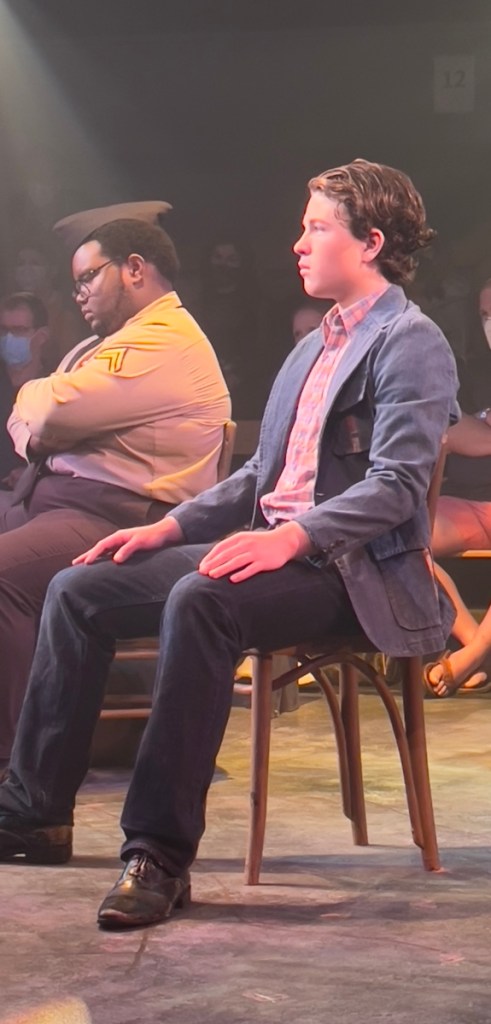

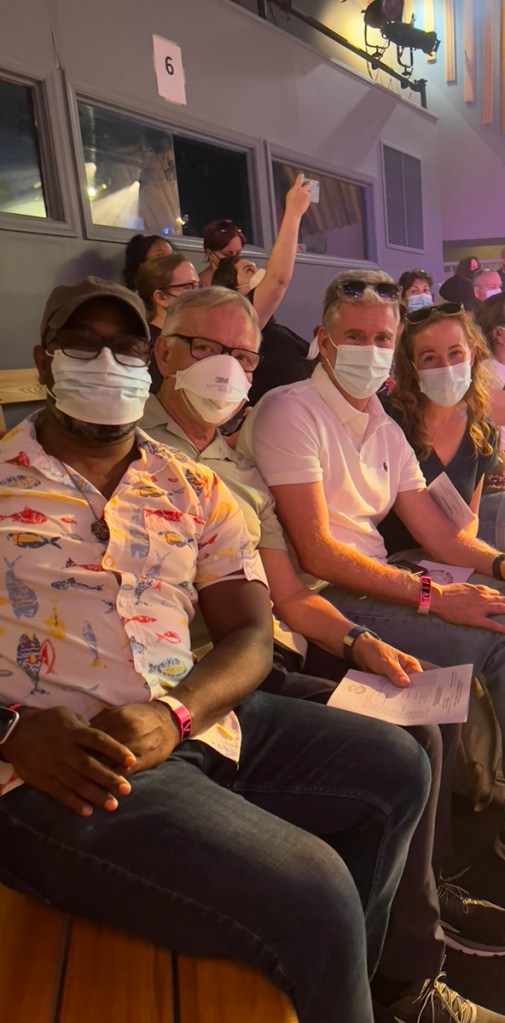
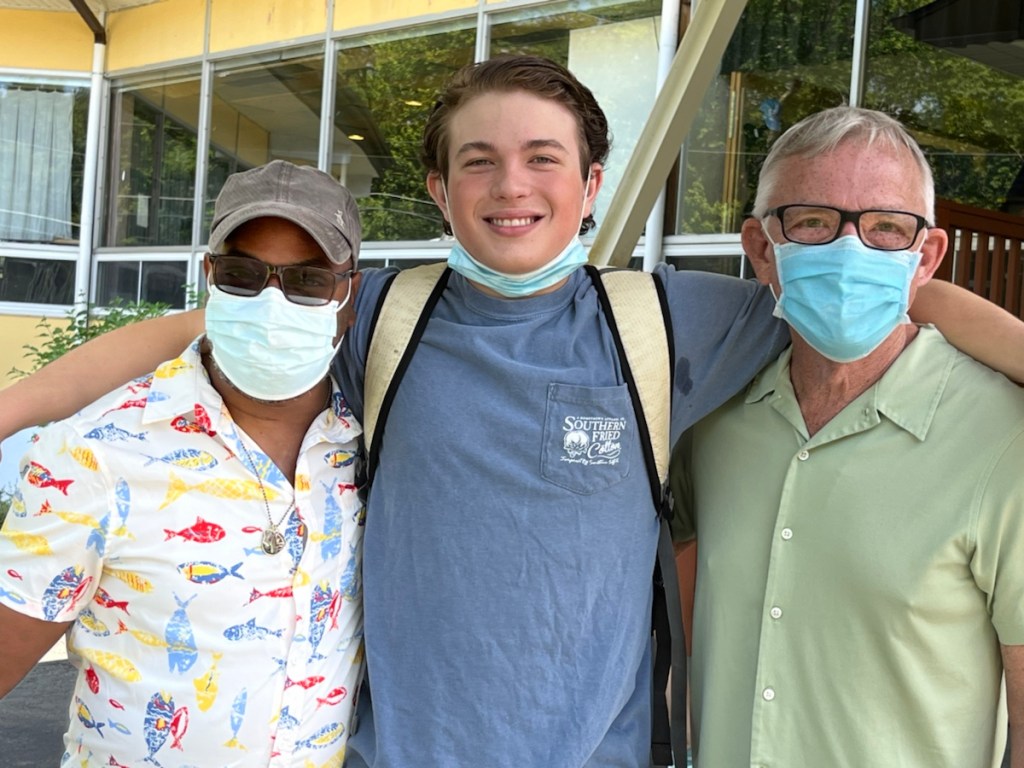
Such fun!
Now we’re in Manhattan, pretending to be cosmopolitan and citified, and not provincial Savannahians. But having such trouble because I forgot to just pack all black chic clothing for both of us.
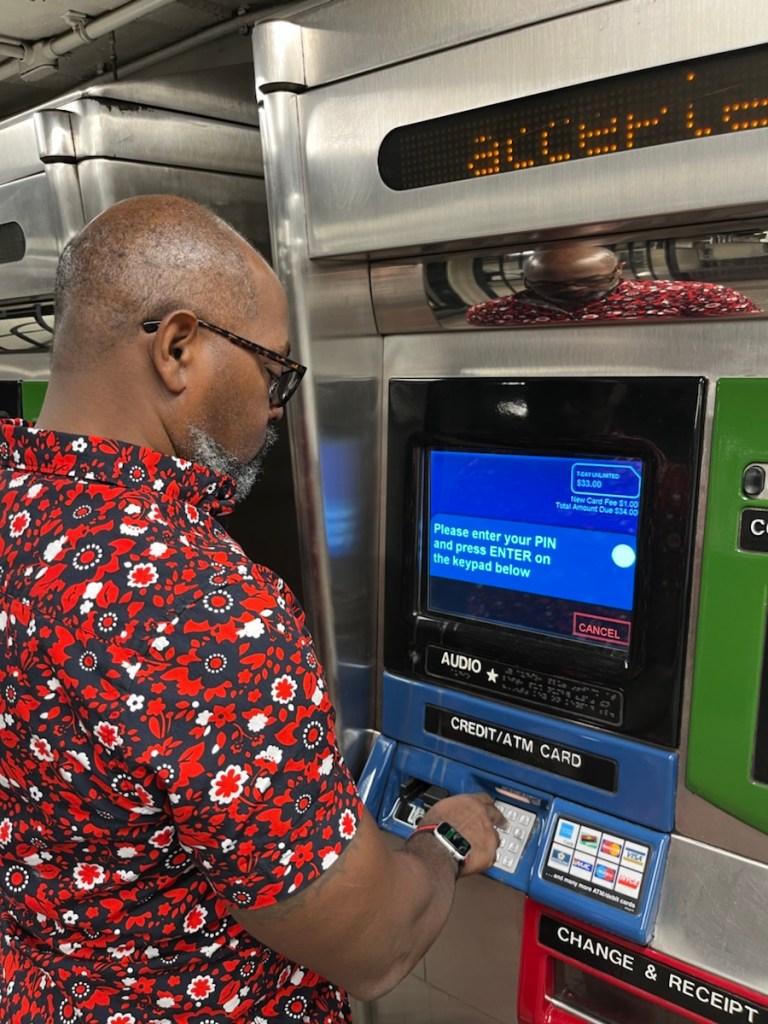


And I bought HR a horse!

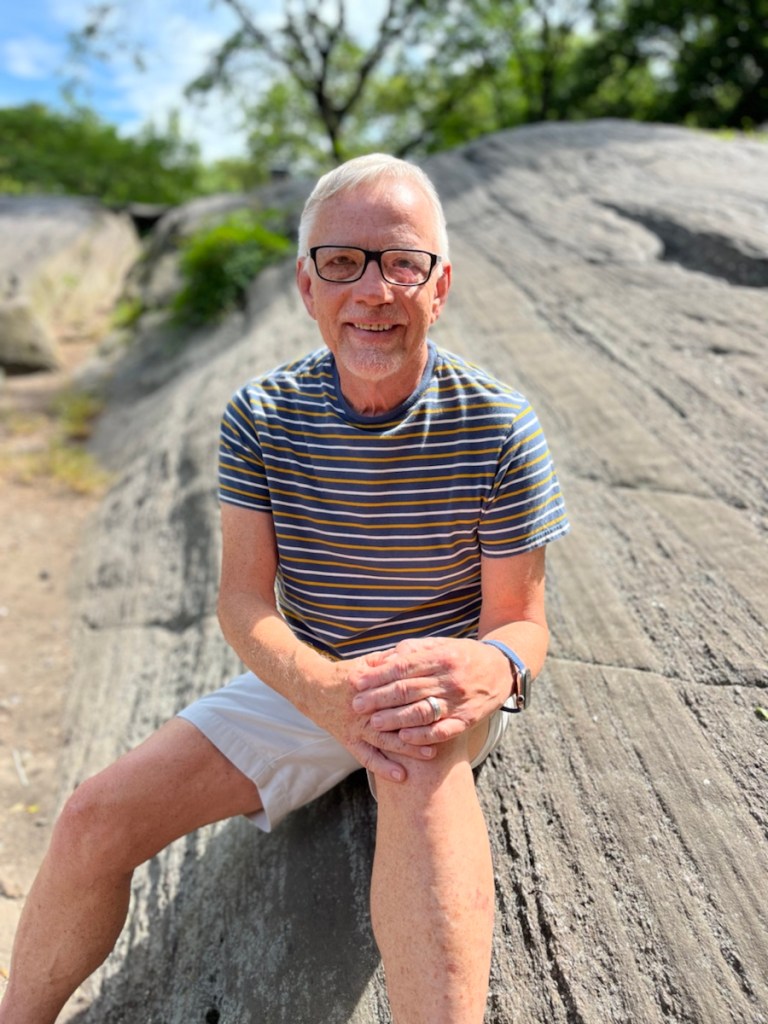
More later.
I’m sure you’re holding your breath!

1. Pausing to take a little mid-day snack break.

2. Youngest granddaughter Isabelle graduating from pre-school.


3. Rain.
4. HR’s new summer do for our trip up to the Catskills and Manhattan.


5. Taking off from Savannah heading to the Catskills to see grandson Daniel in his end-of-drama-camp show.

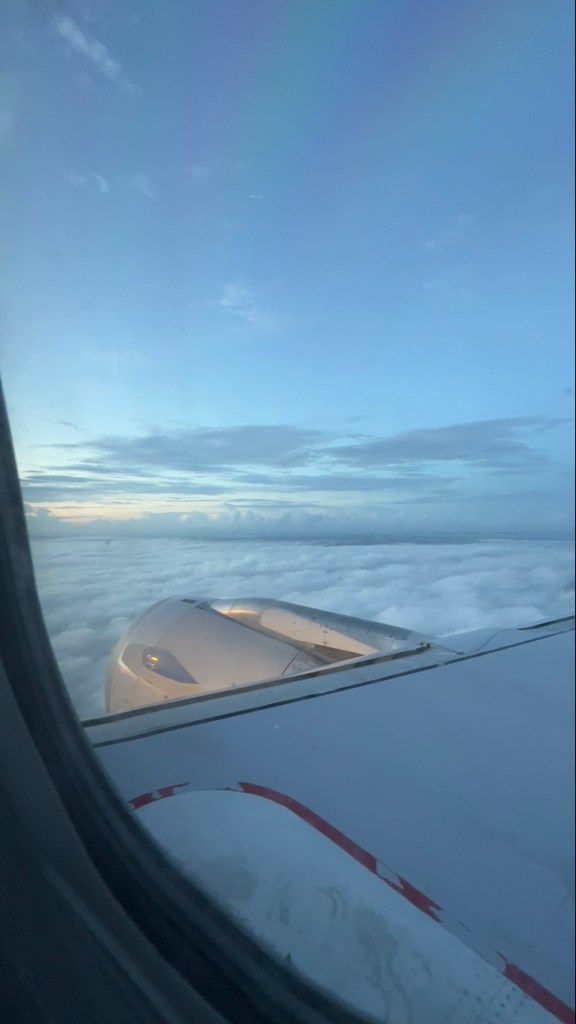
I hope you are taking off in the direction of a terrific weekend.
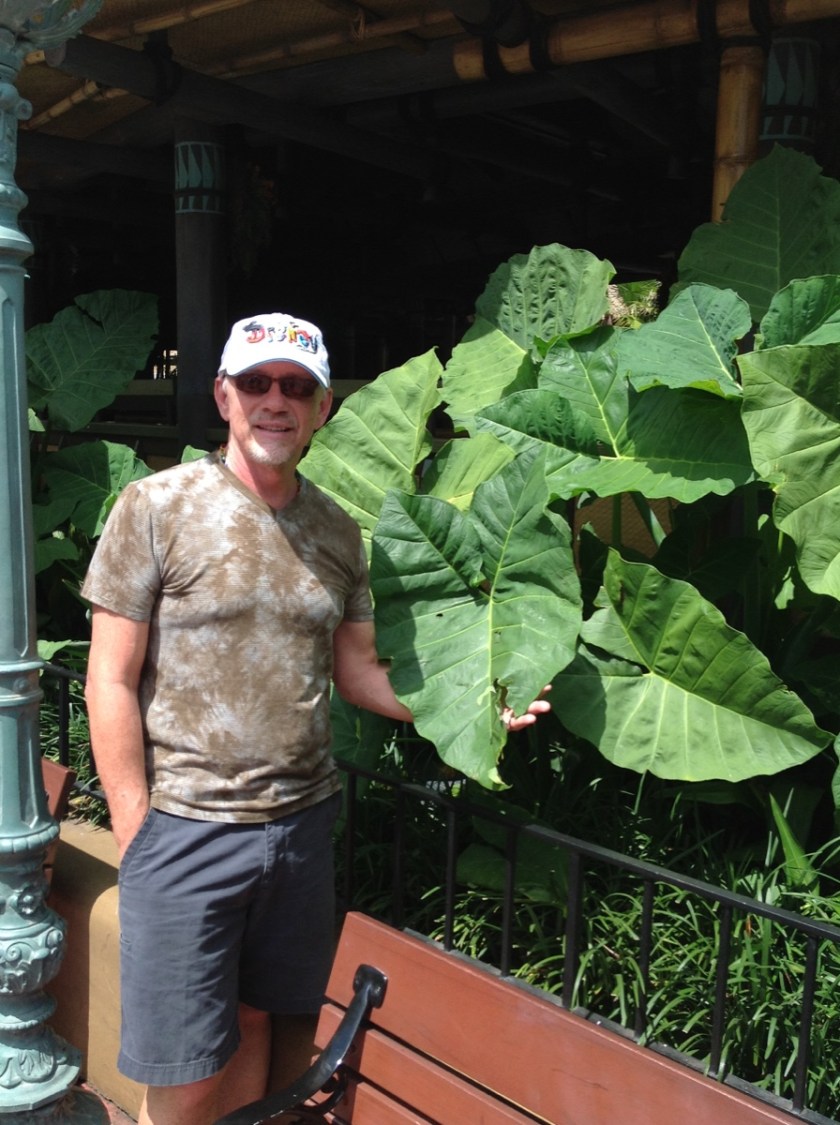
For some reason, which I don’t quite understand, this old post from a decade ago about an enlightening trip to New Orleans has been one of my most popular posts which readers keep reading. So I am presenting it once again as a post from the past. (Please remember, when looking at the photos, this was from a decade ago!)
*************
Is there a botanical specimen you’re just WILD about? There certainly is for me! It’s the Elephant Ear (Colocasia esculenta in plant taxonomy). And not just because they make my big ears look smaller (though, of course, that’s part of it). Elephant Ears also exude a mysteriously mystical and magical quality.
Okay that sounded rather silly and new age-y. So I’d better explain. But when you hear the WHOLE story, DO NOT JUDGE ME! Or at least do not judge me too harshly. Deal?
Well, I have always simply adored the Elephant Ear family of luciously leafy plants. But my REAL love affair with EE’s heated up last October when I trekked to New Orleans to make an academic presentation at the Popular Culture Association in the South annual conference. Really, I’m telling the truth. Okay, fine, here’s proof: a blurb from the conference program:
************
Saturday 11.8 Pedagogy
“A Presentation Software By Any Other Name: The Light and the Dark of Shakespearean Powerpoint Presentations in College English Classrooms” Mark King and David Janssen, Gordon College
“The Visual Essay: Thinking and Playing Outside the Paragraphs” Neal Saye, Georgia Southern University
“Teaching Students to Write for TV and Film: A Comprehensive Plan for the Undergraduate Dramatic Scripting Course” Michael Moeder
************
So maybe mine doesn’t sound quite as smart as the other two. But I had lots of visuals, with continual streaming over two screens! And handouts! And samples of student work! And I gave out colored construction paper and had everyone do little projects! (My hypothesis is that a few bells and whistles, along with hands-on tinkering, can make up for intellectual depth. And besides, it was Saturday morning, for heaven’s sake.)
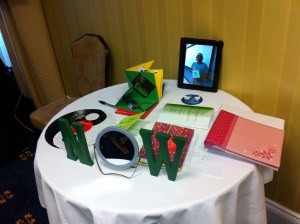
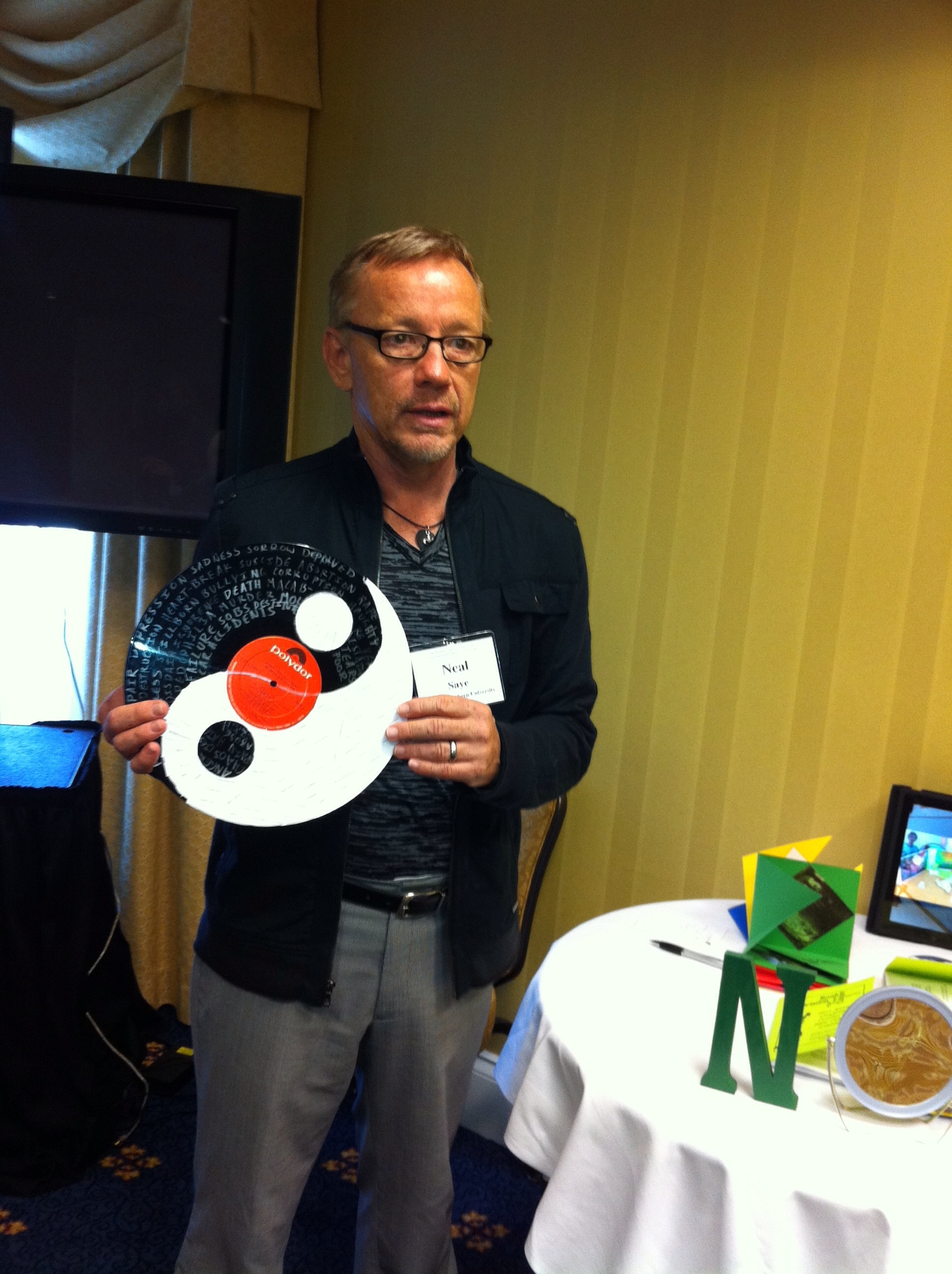
[The Elephant Ear connection is coming, I promise–just give me a minute or two.]
Let’s back up. When I got to the Hotel InterContinental on St. Charles to check in, I used the Winning Strategy a friend taught me years ago: ALWAYS ask if an upgrade is “possibly available.” But BEFORE you ask, set the stage: say something either Pitiful with a Touch of Humor (“I’m SO glad to FINALLY get here to your BEAUTIFUL hotel. My flight was SO turbulent! I prayed more in those two hours than I have in the past two decades! But what a peaceful aura both in this gorgeous lobby AND coming from you! Thank you so much!” or something excitedly exuberant, again with an attempt at a tad of humor (“New-Party-Orleans! I’m HERE! And you’re my INCREDIBLE host/hostess! Can you show me around when you get off work? THANK YOU for having me! You RULE this city!). Then smile like you’re high on beignets and plead for the upgrade. IT WORKS. SO VERY OFTEN. Try it.
I did. And Bam! I was given a Club Level upgrade with full food and drink privileges and a nifty elevator key card that whisked me up to the exclusive Executive Floor. (Another thing, always buy a thank you card and give it to your benefactor during your stay. It’s good karma.)
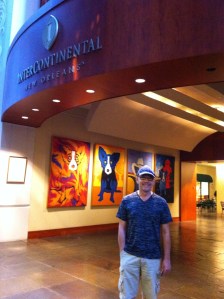
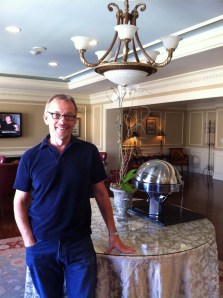
Swinging from chandelier in “the club”:

So the second night in Nawlins, after Wandering around Bourbon Street and Wondering, both quietly to myself and out loud to my fellow conference attendee friends, “Do those people on that balcony KNOW they are sorta naked?” and “Why am I catching all these beads? I have forty strands now” and “That’s a real alligator that monkey is holding, isn’t it?!” I left the decibels and the adult circus, and meandered over, first to sweet Cafe Du Monde, and then to Jackson Square.
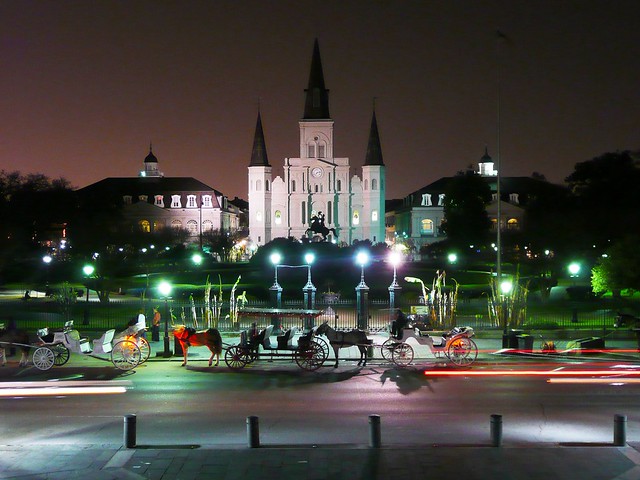
With powdered lips I walked the square’s perimeter, taking in the colorful display of late night street performers, vendors and musicians.
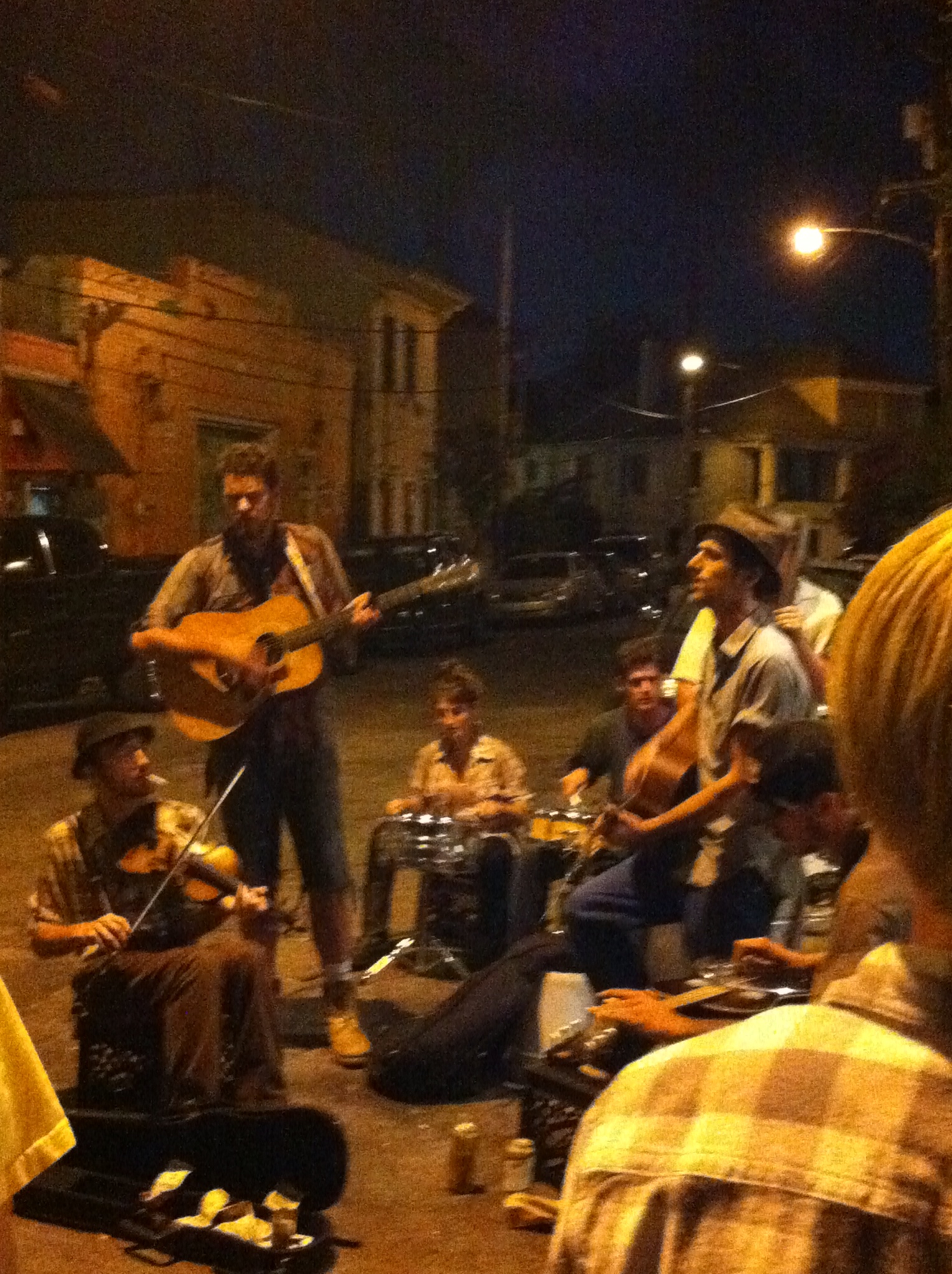

My watch yawned midnight, but my heart gave me the injunction: walk around the square again, and if I make “comfortable, knowing” eye contact with a spiritual reader, I will stop and, uh, be read or whatever.
I walked slowly, my footfalls methodical and audible.
Two-thirds around, I saw her.
A tiny, wisp of a woman from the islands wearing a bandana and clenching a shawl in the sticky October heat. She sat at a card table. Breaking eye contact first, I walked on, feeling silly. So we made eye contact–but “comfortable and knowing”? I don’t think so. Looking back confirmed my foolishness. Her gaze had dropped. Nothing but a bird-like woman beginning to close up shop.
Until she turned her body toward me and smiled. A caramel Mona Lisa. An inviting mystery.
Thirty minutes later I walked away from Ms. Michelle with 1) a small elephant ear plant wrapped in wet paper towels and 2) ears resounding with what I had heard.
“You live near moving water, a river, an ocean, which is good. Go embrace it often. You need the movement of water. You’re too rigid.”
Many other words and images left me, not shocked or awed by their relevancy and accuracy, but at peace with the connectedness of us all, the encouragement of strangers who are not strange after all. Oneness.
“What do you want to ask?
I had two queries. The first concerned the number four (my favorite number). I loved her mathematics. They confirmed what I knew–that all is well.
The second, as I took in the sight and smell of her small display of Mason-jarred summer leftover blossoms and greenery: “May I have that elephant ear?” The green beauty had caught my eye from the start, small but holding its own, even without vibrant yellow or red.
“Of course. It’s for you. Take it. Plant elephant ears, pick them. Put them under your pillow. They are health and good to you.”
Maybe I gave Michelle all the answers by coming to her, by asking questions. Maybe I heard what I knew already. Maybe I embraced the sugary night too tightly. But I walked away buoyed by knowing. Knowing that encouragement takes a myriad of forms.
Unexpectedly I saw Michelle the next day in the sunlight. We hugged and smiled, amped up in the brightness, having taken care of deep talk the night before.
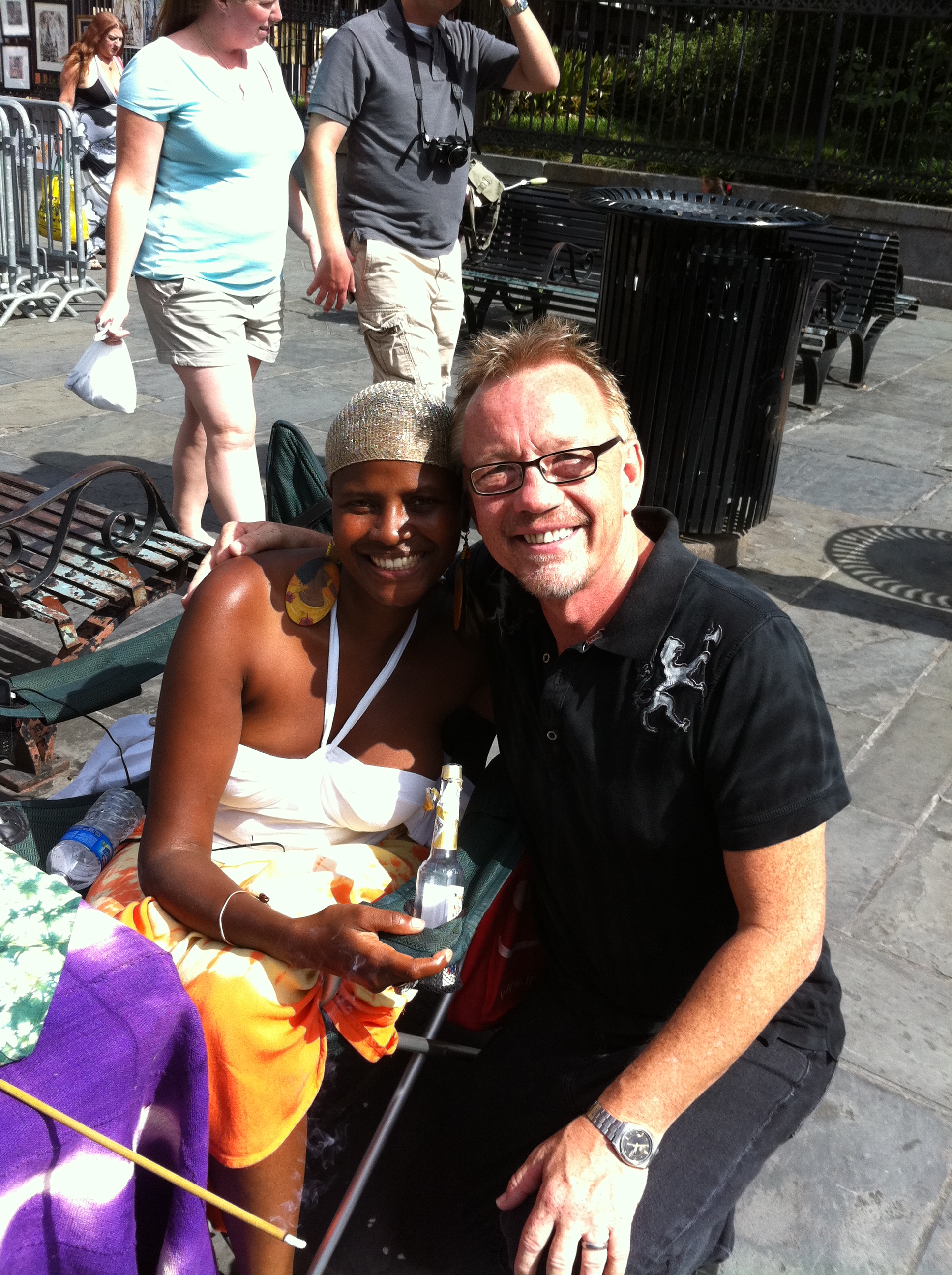
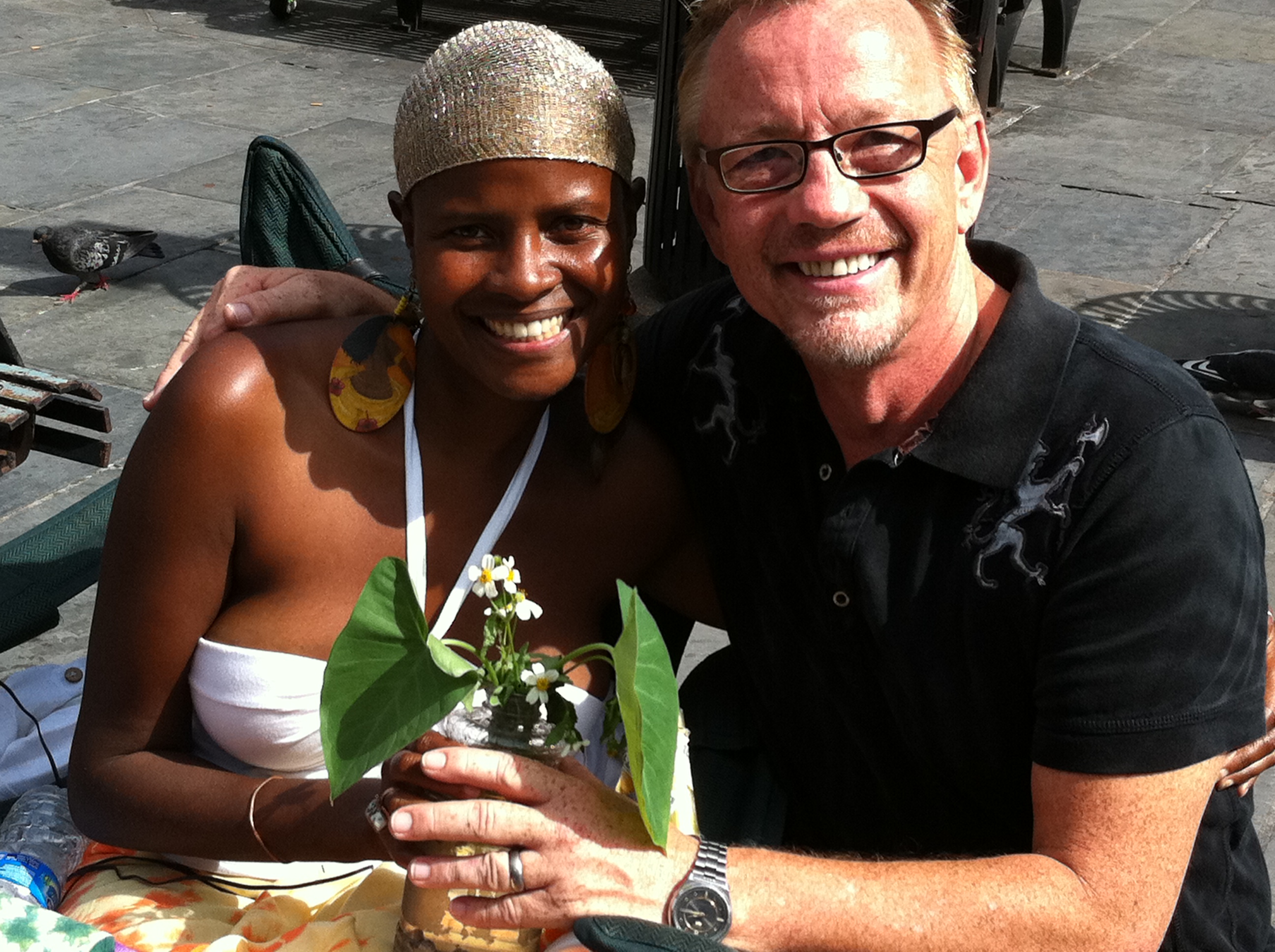
Later in that final day of my New Orleans stay, I stumbled across the Jean Lefitte National Historic Site and Preserve.

But what was REALLY cool is what I found there:

Water. And Elephant Ears. Across the street from the mighty Mississippi River.


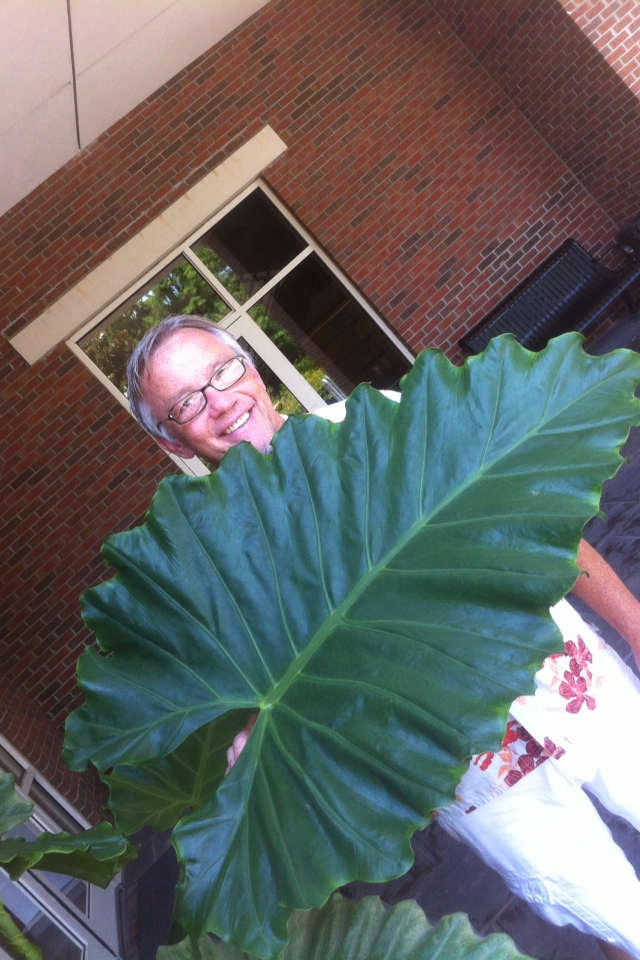
Back home in Savannah, one day I strolled the campus of Armstrong Atlantic State University, and here’s what I found:

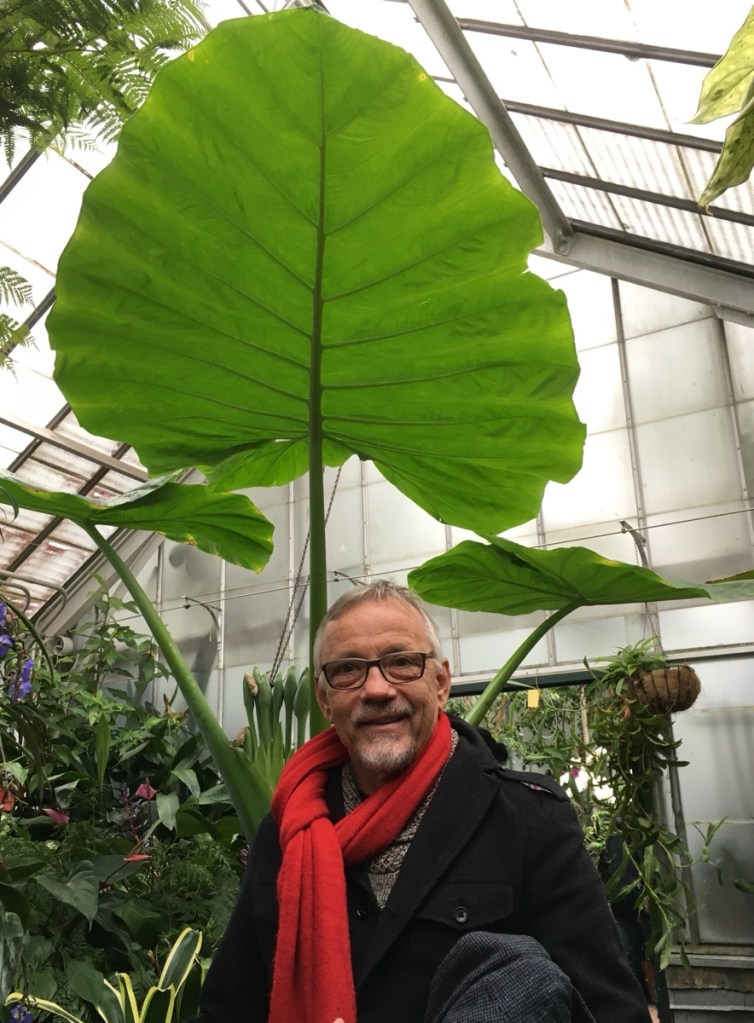
Huge Elephant ears.

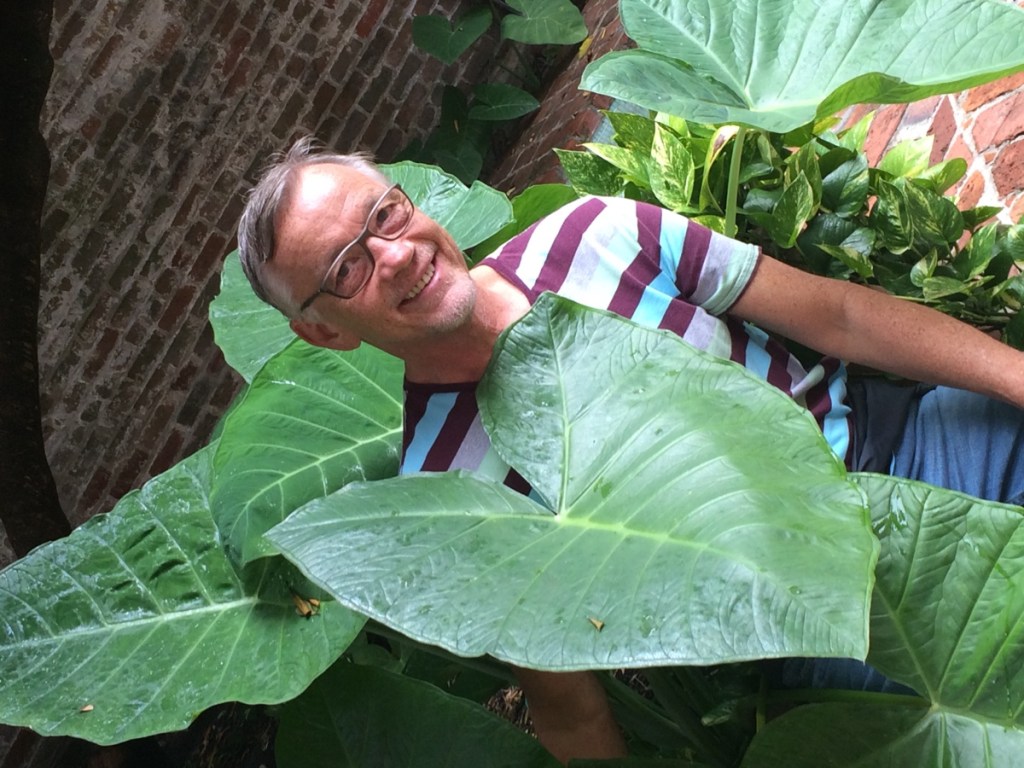
Oh, I planted my own Elephant Ears. This summer they grew beautifully:


(Excuse me for looking a bit like Captain Kangaroo in the above pic. Google him, kids.)


Moral of story (at least for me): Listen.
************
NOW: Today Robert and I live two blocks from the Savannah River. And every time I walk along that powerful river (hosting one of the busiest ports in the country), I think of Ms. Michelle.
TIB: Truth in Blogging. Back when I first did this blog post, I was not out as a gay man. But Robert was with me on this trip. He did most of the pictures. I feel terrible today that I didn’t recognize him then, but what was, was—and what is, is.
And over the years, I have discovered elephant ears and their cousins everywhere …