Posted in Uncategorized

The Viewing & The Circle of Life

As I mentioned in a previous post, my father-in-law passed away earlier this week. Death, of course, is difficult for anyone to cope with, but perhaps especially so for young children. Because they are still so close to birth, little beings of the morning, and because their life experience has been with newness and fresh discovery, with joy and giggles, death must seem unfathomable, foreign, outside of understanding.

But like most kids, my four-year-old grandson Daniel likes to understand: “Abu, why can’t I sit on top of your car? I could see a whole lot better.” “Abu, my teacher won’t let me bring my sword to school and fight like the blue Power Ranger. Why not?” “Why can’t I say potty words?” “Why do we have to wear clothes when it’s hot?” “Why?” “Why?” “Why?”

When his parents arrived at the funeral home north of Atlanta the other evening, they told me that Daniel had, as usual, been plying them with questions about the current subject which went beyond his grasp–his great-grandfather’s death. “But if Papa is in heaven, why will everyone be sad?” “Where IS Papa?”

I played with Daniel and his little brother Gabriel in the large kitchen area of the funeral home, where friends had brought mounds of food. Their mom and dad, Amy and Orte, walked through large white windowed doors and down a narrow hall that eventually led to a sitting room where the family received guests who came to pay their respect and offer condolences. Papa looked pre-cancerous in a striking gray suit, snow-white shirt, and brown and gray tie patterned with tiny crosses. He had been a Methodist minister in the North Georgia Conference. A large United States flag, achingly resplendent in red, white and blue liveliness, lay across the unopened lower half of the coffin. Papa was retired Air Force.

Every few minutes, Daniel ran over to tiptoe and peer through the windows of the white doors, gazing down that long hallway which twisted and turned but allowed no view of Papa. “Where are Mama and Daddy? I want to go too.” A few minutes later: “Why can’t I go in?” “Is Papa in there? Where?” “Let’s go in there, Abu.”

A while later, when we were eating lasagna in the kitchen, Daniel was still asking, asking. I made a decision, a decision you may not have made. I asked Daniel’s mom and dad if I could take him in to see Papa. They agreed, mainly (I think) because they trust me, and they know how much I love D.

I picked Daniel up and asked him if he knew what had happened to Papa. “He died,” came the quick answer. I told him that yes Papa had died. “And he’s in heaven,” Daniel added. His confusion centered on who or what was down that hall that everyone kept traversing. He wanted understanding, answers. He wanted to walk down that hall.

So we did.

The kitchen had been noisy with visitors loudly talking, eating, reminiscing, and occasionally laughing at the past. Its tiled floor amplified the clicks of my boot heels as we walked, Daniel in my arms, toward those doors, dividing doors which in my grandson’s mind led to answers. As we passed through them, my heels, like everything and everyone on that other side, grew quieter on the deep carpet.
We entered the viewing room, and walked past adults talking in hushed tones. Daniel kissed his Nana (Donna is the oldest of the four daughters of Papa), then his Great-Grandma, who sat regally next to the coffin. But his eyes were looking, searching.

Not expecting Papa to be lying down (why didn’t I think to tell him that detail?), Daniel finally found his great-grandfather.

He looked for a while, and finally asked quietly (Daniel doesn’t usually do “quiet” very well), “Is Papa sleeping?”

“No, not really sleeping. He died, remember?”

We stood there for about a minute, Daniel getting heavy in my arms.

“Are you ready to go, baby?”

“No.”

Other folks waited patiently for their turn behind us. Daniel started to lean over toward the coffin, paused and looked at me for permission (and like “quiet,” D doesn’t always do “permission” well). I nodded, and Daniel touched the white satin edges of the liner and then Papa’s right arm.

Giggling just a bit, Daniel said, “It tickles.” I smiled.

“You ready now?”

“Yes.”

We walked back through the hall, toward the kitchen. When we got to the doors, I saw through the windows my daughter Amy and Orte, waiting. I put Daniel down, and he pushed open the door. His dad asked him, “Are you okay, Daniel?”

But he was already off, running on the noisy tile, chasing his little brother. Doing “loud” once again.

Posted in Uncategorized

StereoStopping

My father, Harold Saye Sr., 87 now, taught me the single most important lesson of my life when I was a child.  He taught it primarily through living the lesson out day by day, year by year–through a lifetime.  He also imparted the lesson to me in simple words: “Neal, treat every person you come in contact with as if they are the most important person in the world.  Because when you are with them, they are.”

I learned from my dad, for example, that old people should be respected, revered even, for the years they have lived and learned.  For the truth they know.  He showed me how to love his mother, my Mama Saye, by just listening to her talk as she neared her death.

My father taught me to smile kindly at Joe Junior Watkins, the man/boy in ever-present overalls who wasn’t quite right, who grew older but remained a child.  “Don’t ever make fun of people, Neal.  They’re doing the best they can.”

I learned from my daddy that if you allow yourself to hate somebody because he or she is different from you, the next step comes easy: you can ignore them or fight them or kill them even.  “Don’t let that happen to you, Neal.”

He taught me that different is not bad.  It’s just different.

I grew up in the tiny North Georgia town of Ball Ground, where there were no blacks.  Not one.  But my father had black co-workers in his job as a machinist in nearby Canton, and he would invite his black buddy and his family to our house.  I learned early on that skin color is … skin color.

My father taught me to do whatever I can in my life to …

I certainly have not been 100% successful in this endeavor (probably not even 50%), but I am SO glad that I had such a wonderful model.

Now I try to teach my students that college should be an opportunity for them to embrace a diverse mix of people: different ethnicities and cultures, sexual orientations different from their own, different age groups, faiths, sizes, personalities, etc.

I want to ask you to do something.  Watch the video below.  Its a bit hard because it’s fairly long (about ten minutes) and it’s difficult to understand all the words of the speaker (but in a way, that difficulty is part of the lesson of today’s post).

(Monologue for the play Running Upstream, performed by Jordon Bala at my church a couple of weeks ago.)

I challenge you to develop a mother’s eyes to see, to see, to see.

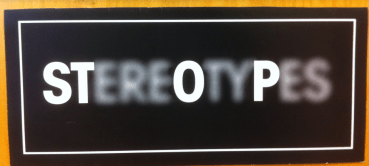
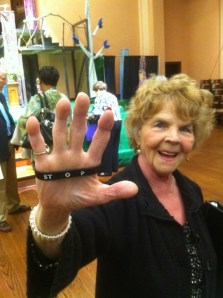
I challenge you to join the crusade to Stop Stereotypes!

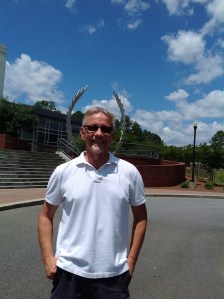
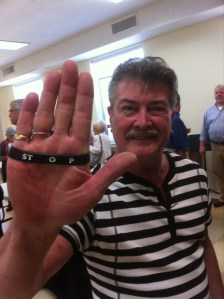
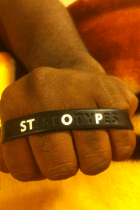
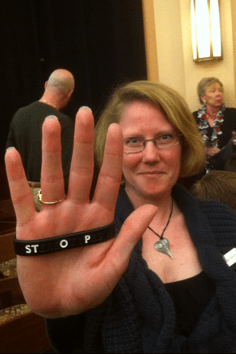
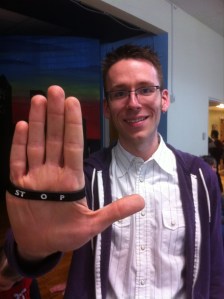
You and I– and the world–will be happier with the stopping.  Below are a few of my buddies who want to join in on the StereoStopping:


Will you join us in the fight?