Marveling again this Monday morning.
Remembering my fried okra the other night.
(I’m quite aware that some folks would put this in the “moaning” not “marveling” category.)
Marveling again this Monday morning.
Remembering my fried okra the other night.
(I’m quite aware that some folks would put this in the “moaning” not “marveling” category.)

I know, I know. I’ve posted about okra before, but it really is my very favorite vegetable in all the world! And I also know that it is some folks’ very least favorite vegetable. (Although botanically, I understand okra is classified as a fruit.)
We picked up some local okra at the farmers market here in Savannah. And even though we don’t eat a lot of fried food, I simply HAD to fry the okra in the classically Southern manner.
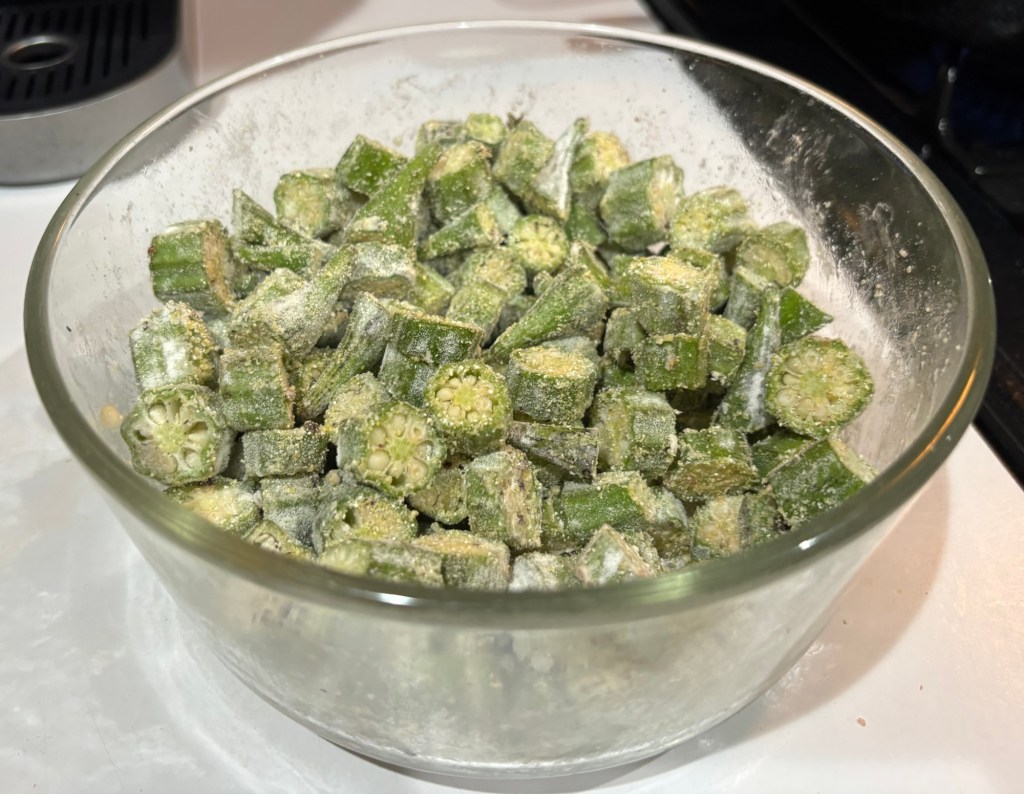
I chopped the pods into beautiful little circles, added a hand sprinkle of water, a heaping tablespoon of flour, another heaping tablespoon of cornmeal, with several shakes of salt and pepper.

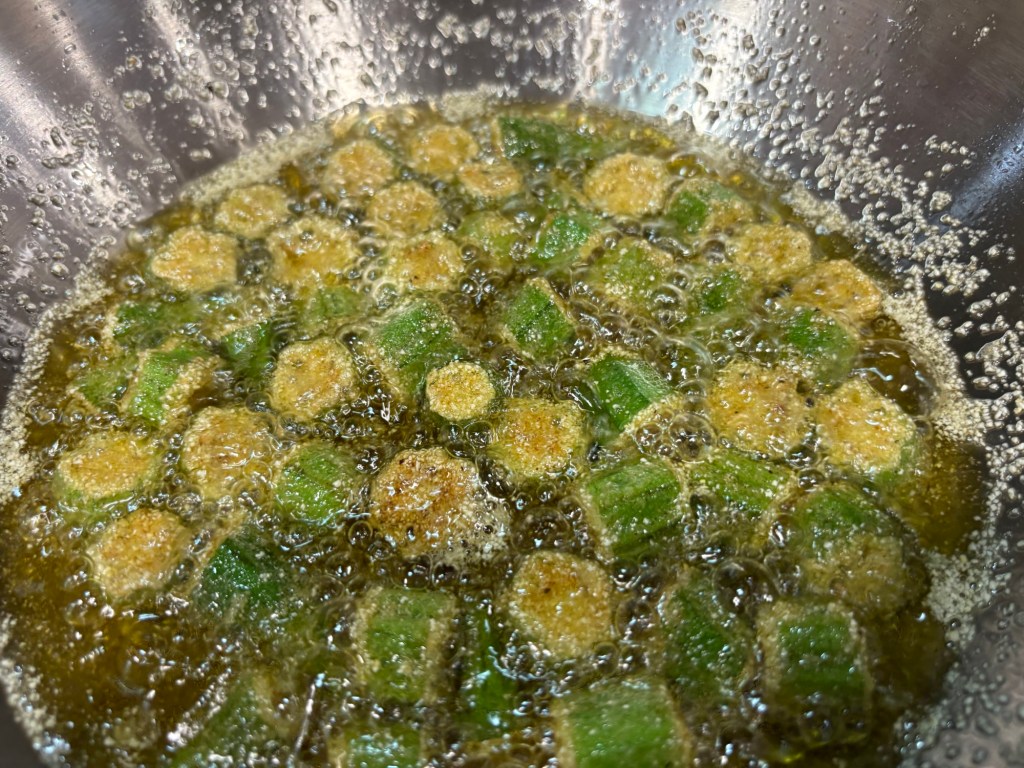
I then heated the oil until one of the little okra circles did a lively dance when I dropped him in my grandmother‘s ancient cast iron skillet.

The key to good Southern fried okra is to fry it in uncrowded batches. They like a little room as they swim in the hot oil.
Here’s a riveting video of my frying technique. Listen as the okra dances in the pan, similar to synchronized swimming.
I added Cayenne pepper for my second batch.
But what to serve with the fried okra?
Other fresh local vegetables, of course.
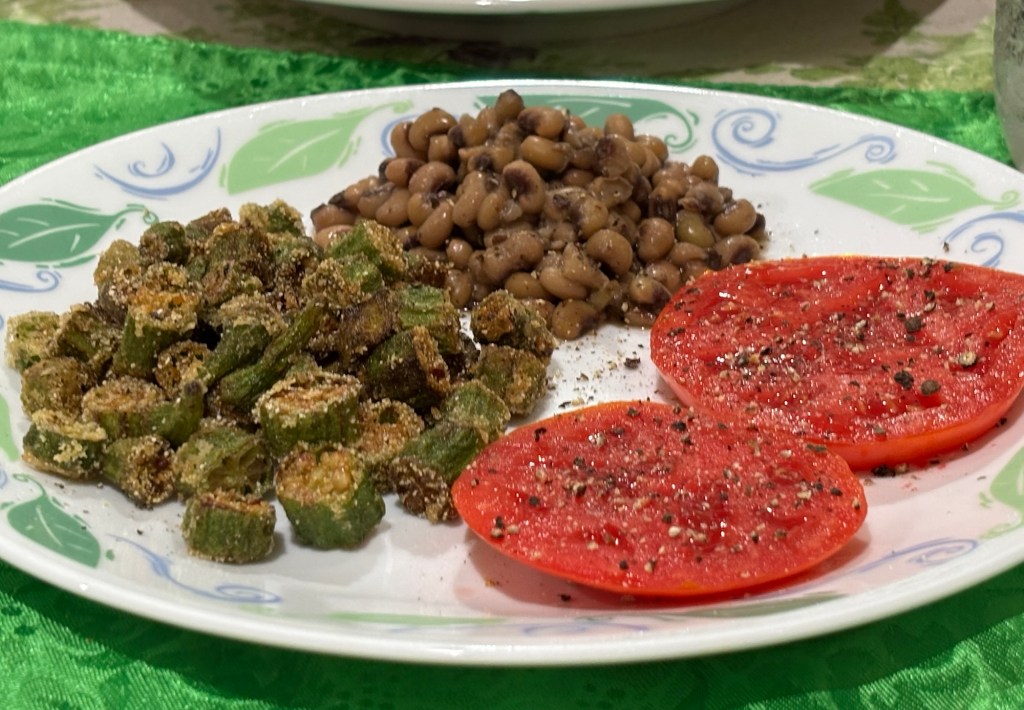
Vine-ripened tomatoes.

Red-eyed peas.
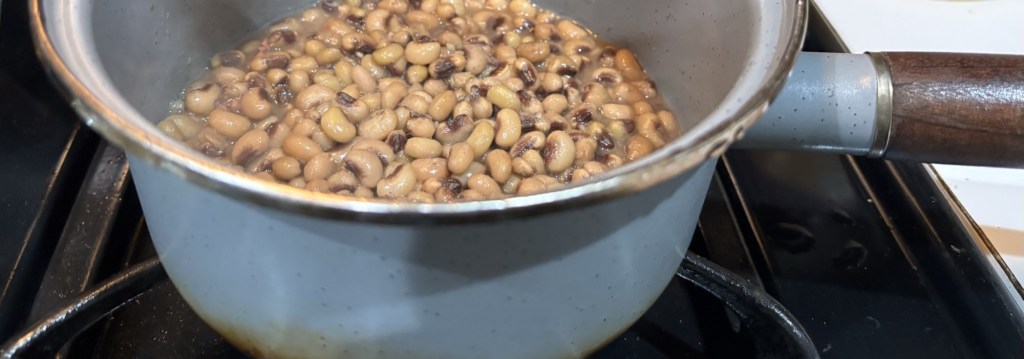
In case you didn’t know: “Red Eyed Peas” or “Red Peas” refers to a type of legume often described as an heirloom variety of cowpea, similar to black-eyed peas. They are a popular staple in Southern cuisine and have roots in West Africa. Google AI
Now it’s time to sit down and eat!

Delicious, Fresh and Local Summer Supper


My weekly gratitude journal, of sorts.
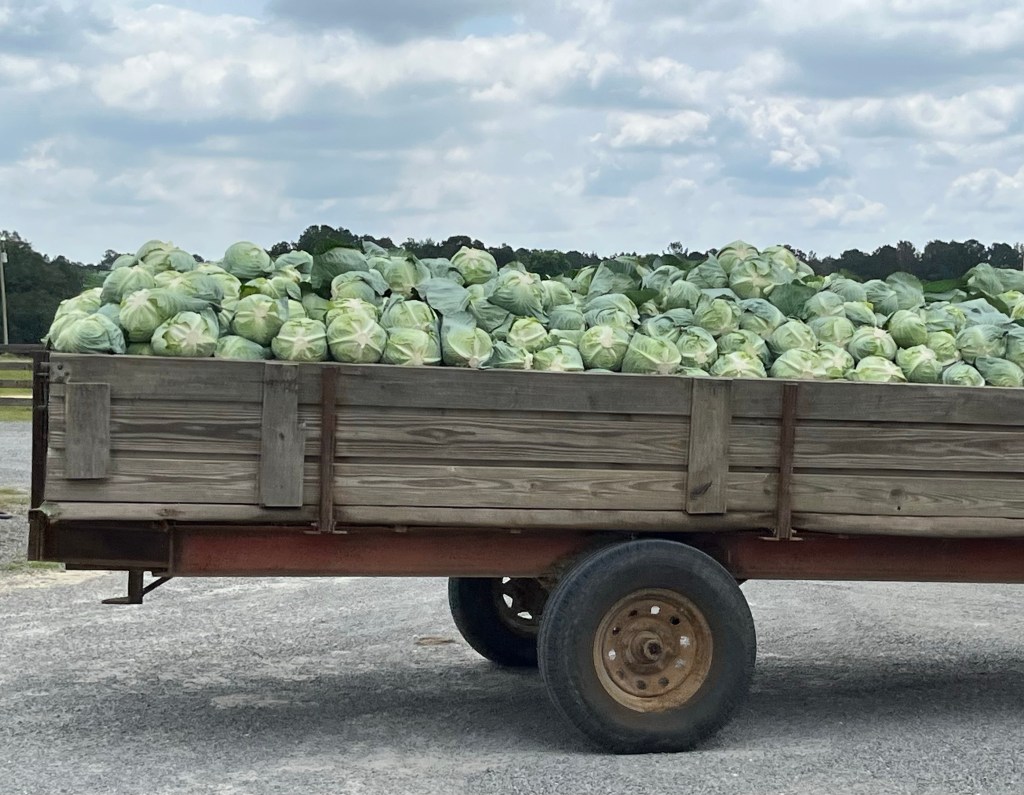
1. This beautiful head of cabbage we got a nearby farm store, Pittman’s Country Market, over in Lyon, Ga.

We were fortunate enough to see the farmers hauling in the freshly picked cabbages.
2. Having dinner with grandson Daniel—far right—and his three best buddies (all actors like him).


Nearly impossible to keep up with their energy, but Robert and I had a blast!
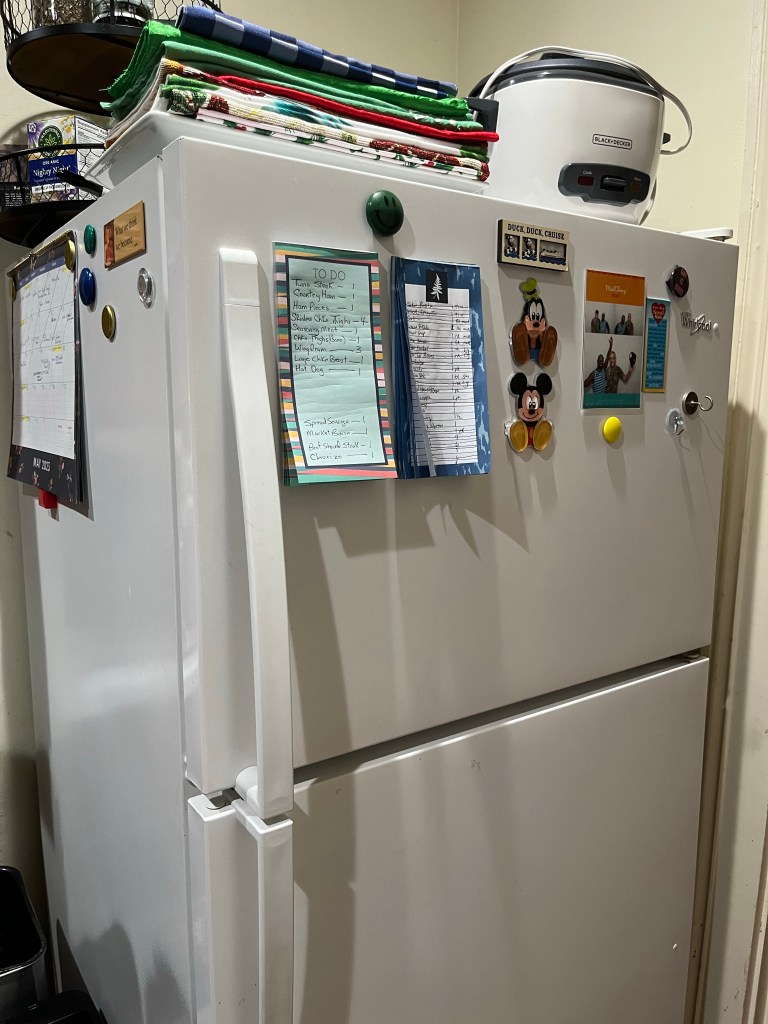
3. Our refrigerator. It keeps things cold! And it even has a section that freezes! Do you have one? What an incredible blessing that I so often take for granted.
4. Robert’s fried (okay, okay, I know, fried) okra (okay, okay, I know, okra) the other evening.


Yum!
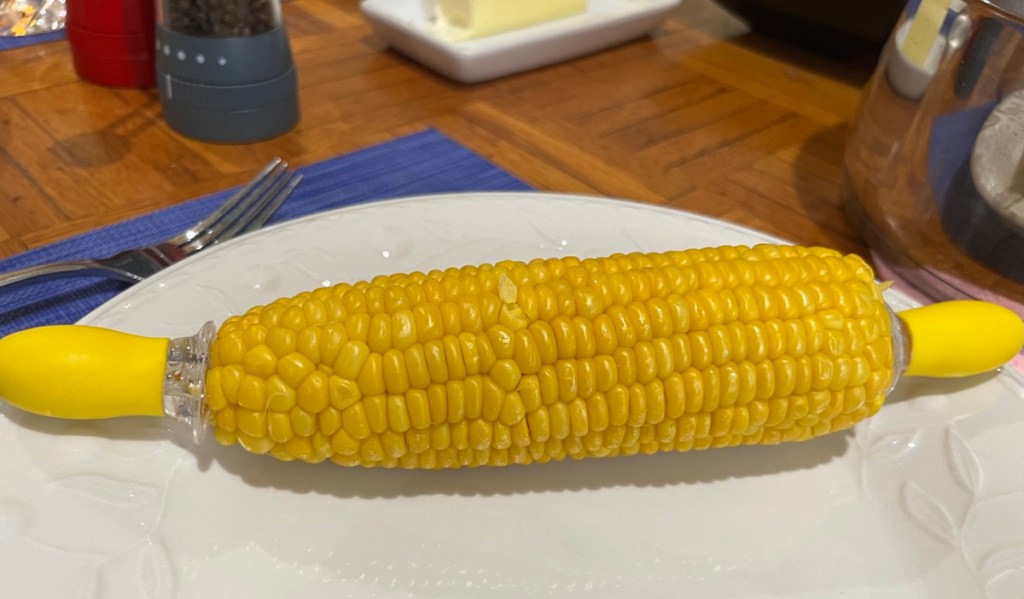
5. And corn on the cob.
I hope you have a delicious weekend ahead.
A Few Things I’m Thankful For this warm Tuesday evening in Savannah:
** Learning to make Watermelon Gazpacho soup. So good!

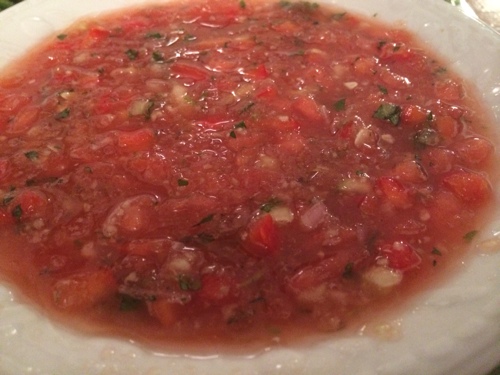
It took me FOREVER to dice the watermelon, cucumber, bell pepper, shallots, etc, but SO WORTH IT. Yum.
I may just become a Food Network star.
** Cannons

** Peel and eat shrimp
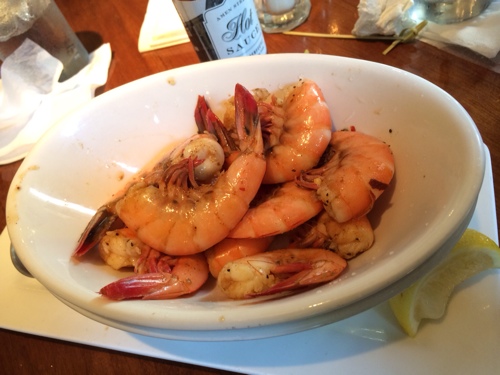
** Cool backgrounds for pictures

(Inside Fort Sumter in Charleston yesterday.)


** Spoiling the grandtwins with chocolate cupcakes.



** Selfies with my parents (90 and 87) and brother Danny.

** Figs


** Root Vegetable Roasts!

** Speaking of vegetables, Vegetable-laden Bloody Mary’s

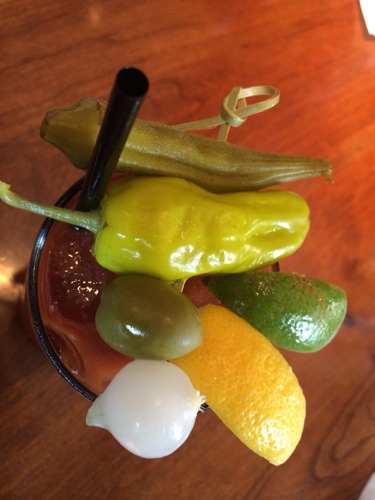
So healthy!
** Being able to bend my body
** Fifty Shades

** Clouds

Happiest of Nights to you all!

Okra is BY FAR my favorite summer vegetable. I grew up in north Georgia having to take a knife out to the garden nearly every evening, wearing a long-sleeved shirt in the summer heat, and cut the star-shaped veggie off its itchy stalks. But, oh my goodness! The taste! After my fried okra plateful, and then the gumbo, I was life-long-hooked.
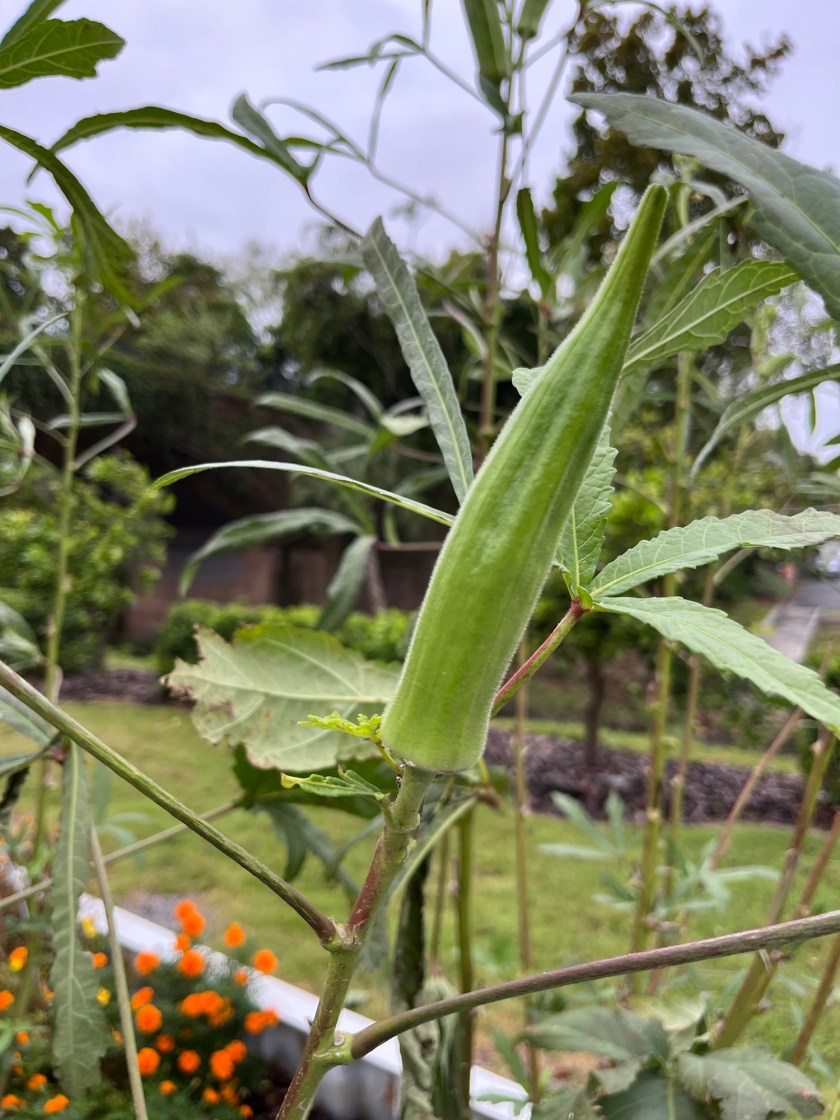
Okra: Herbaceous, hairy, annual plant of the mallow family (Malvaceae). It is native to the tropics of the Eastern Hemisphere and is widely cultivated or for its edible fruit. The leaves are heart-shaped and three- to five-lobed; the flowers are yellow with a crimson centre. The fruit or pod, hairy at the base, is a tapering, 10-angled capsule, 10–25 cm (4–10 inches) in length (except in the dwarf varieties), that contains numerous oval, dark-coloured seeds. It may be prepared like asparagus, sauteed, or pickled, and it is also an ingredient in various stews and in the gumbos of the southern United States; the large amount of mucilage (gelatinous substance) it contains makes it useful as a thickener for broths and soups. In some countries the seeds are used as a substitute for coffee. The leaves and immature fruit long have been popular in the East for use in poultices to relieve pain.


— Encyclopedia Britannica (Well, not the pictures.)
************
I LOVE chopping okra–the smell, the texture, the soul involved.
Just finished chopping this mess:
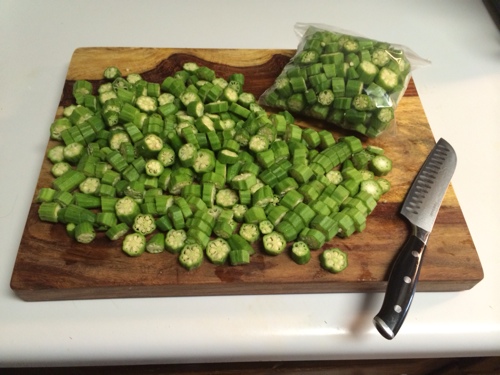

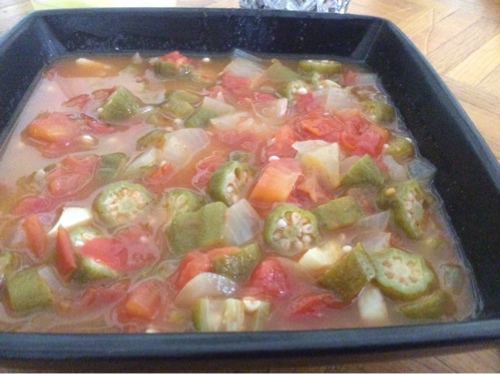
And my gumbo from the other night:
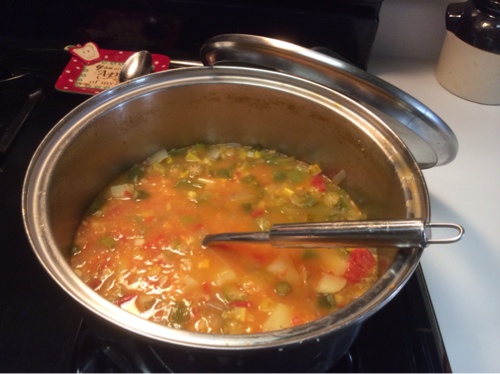

Just look at a few of the Health Benefits of MOKRA (my okra):
— http://www.nutrition-and-you.com/okra.html
Good Evening to All! Eat MO OKRA!
Neal’s Ridiculously Simple Okra Gumbo:
One medium onion, a few cloves of garlic, some okra, a few vine-ripe tomatoes (emphasis: vine ripe)
Sautee your chopped onion in a tad of olive oil. Add the chopped tomatoes and either a couple cups of vegetable broth (I make mine when I’m boiling corn or other vegs–don’t throw that nectar away!) or water. Simmer a few minutes. Then add the sliced-pretty okra. But not too long. You don’t want it all mushy. 10 mins is great. Don’t add much salt-you want to taste the okra!
Savor.

