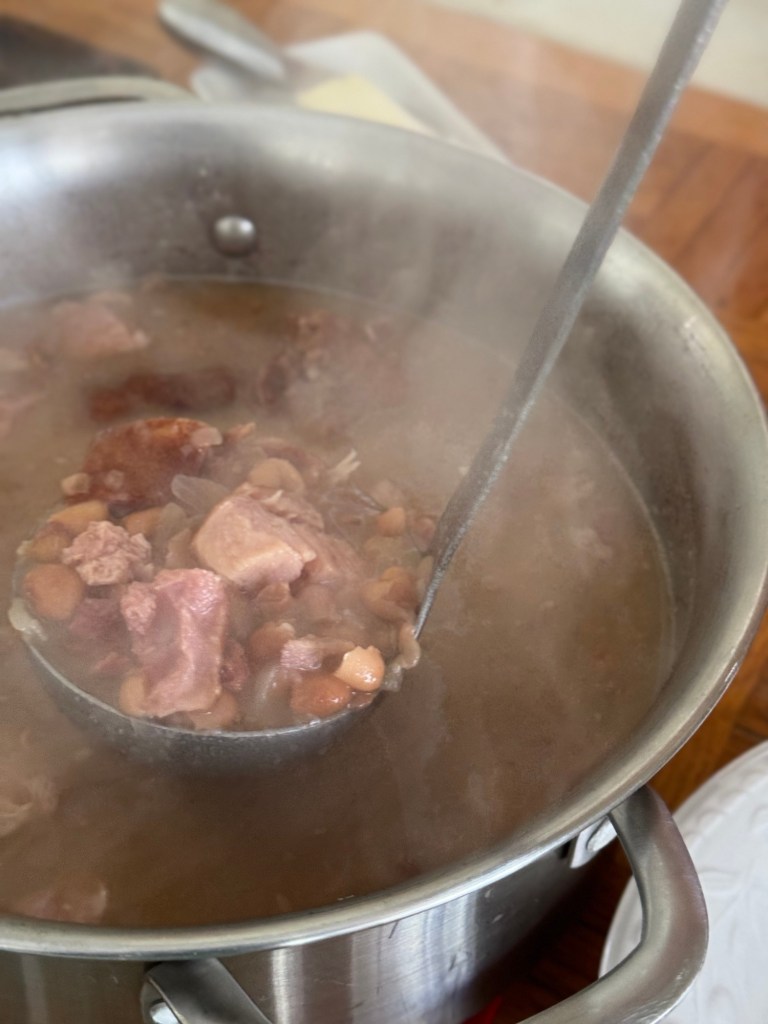
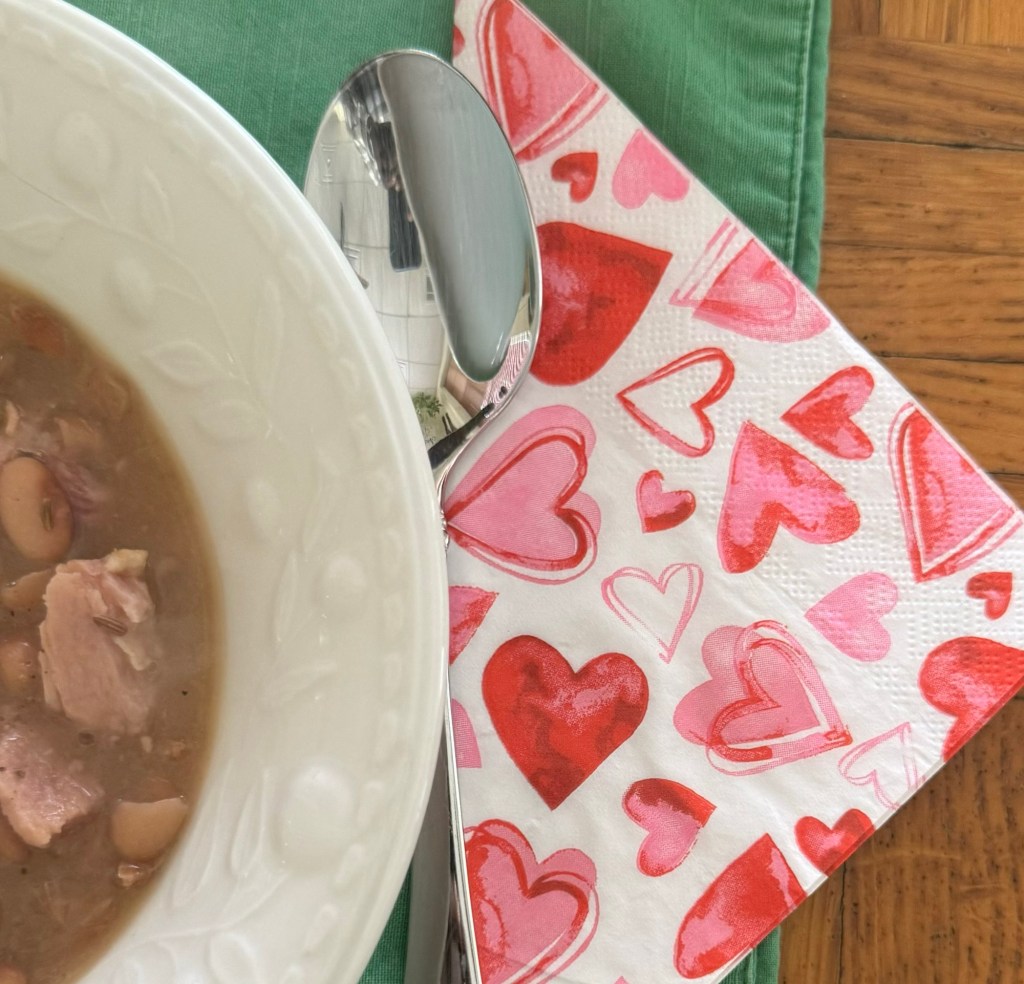
So recently, Robert concocted some fancy-smancy recipe that required buttermilk. He only used a little of the quart container, so frugal that I am, I had to come up with some way to use the rest. “We CANNOT waste $2.19!!!”
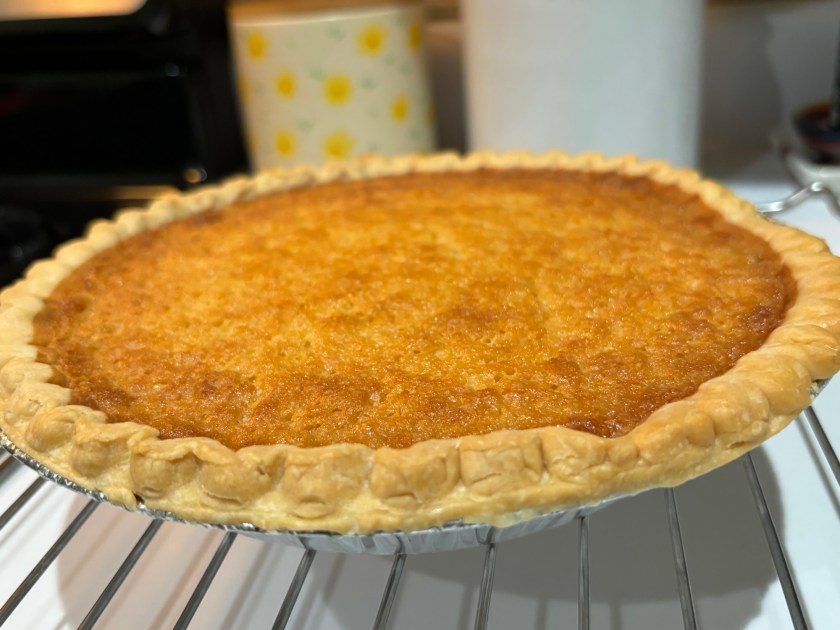
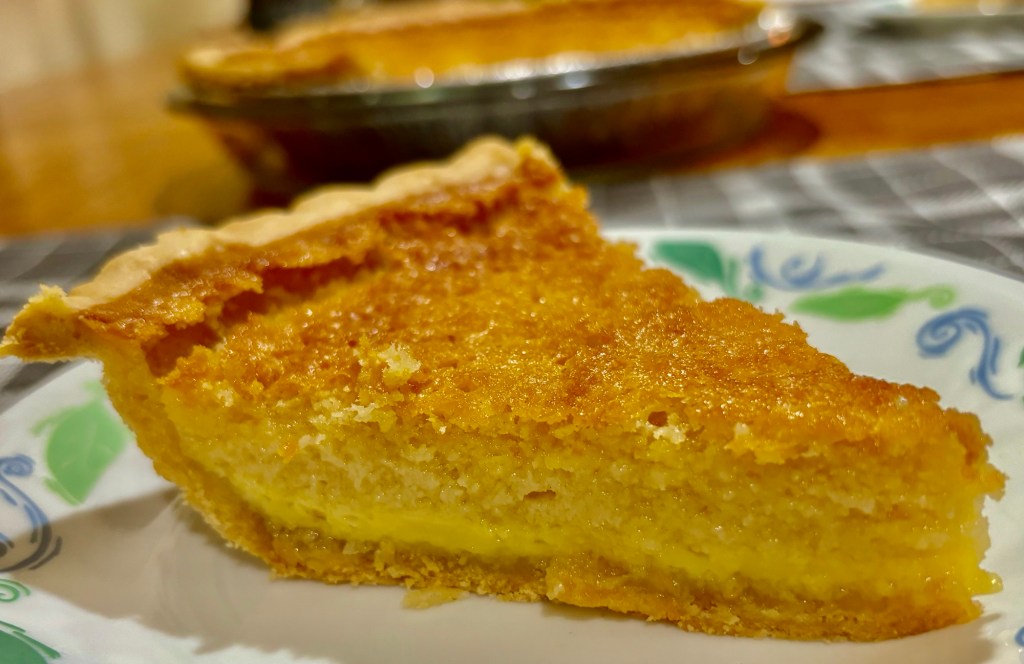
And then it hit me… Buttermilk pie! Like my mama and grandma used to make.
According to mycountrytable.com, “Buttermilk Pie is believed to have originated during the depression. This was during a time when some ingredients were either scarce or too expensive, leaving home cooks to make do with whatever they had in their pantry. Home cooks found a way to make a pie with few ingredients out of desperation, hence the name, desperation pies.”
“Several pies originated during the depression out of pure necessity. These pies were all classified as desperation, depression, or make-do pies. Some of them include Buttermilk, Vinegar, Shoofly, Chess, Sugar Cream, Oatmeal, Mock Apple, Mock Mincemeat, Green Tomato, and even Water Pie.”
So, what is buttermilk?
“Traditional buttermilk is a thin, cloudy, slightly tart but buttery-tasting liquid that’s left after cream is churned to make butter. These days, however, it is more commonly sold as a thick liquid produced commercially by adding an acidifying bacteria – and sometimes flavouring and thickening agents – to milk.” bbcgoodfood.com
I went to work.
Not having the patience or the intelligence to actually make a homemade crust, I ran to the grocery store and bought a deep dish frozen piecrust.
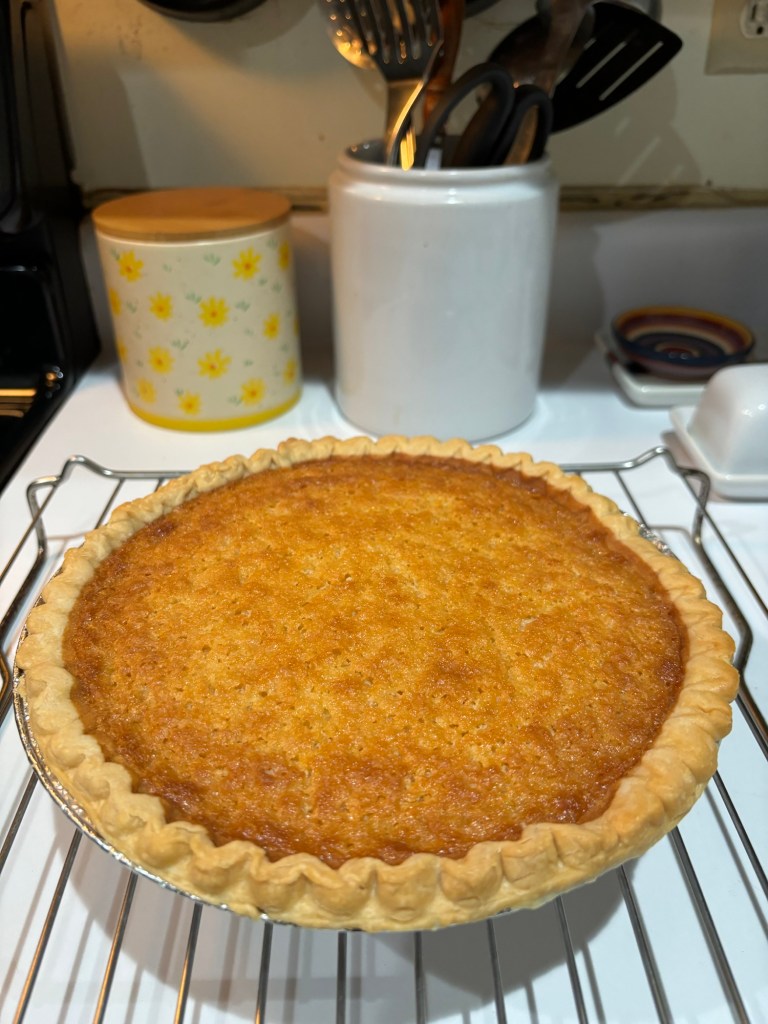
Put all the ingredients together (in five minutes!) and voilà!
It was a nostalgically delicious taste of past family culinary lore.
And Robert had never had buttermilk pie before. So it was extra special.
So yesterday, Robert and I sashayed over to the Telfair Museums here in Historic District Savannah. (Yes, it’s plural—there are three separate buildings and locations.) One of the joys of living downtown is its walkability. (Is that a word, or did I just make it up?)
I wanted to see one of the newer and smaller exhibits at the Jepson Center.
I have always considered birds to be the personification of elegance and upper echelon beauty.
So HR got me this cool and beautiful book for Christmas.
I love it.
From the intro: “Flowers are incredible. They have the power to calm, heal, and allow us to express our deepest emotions without saying a word. They can boost your mood, reduce stress, and improve well-being.”
“Choosing a flower for its traditional meaning, natural energy, or holistic properties, you can bring the benefits of the natural world into your home or workplace, and into the lives of loved ones.”
My birth flower is the carnation, so when I turned #{£%&@ on January 10, we picked up some pink and white lovelies.
Following the advice of philosopher of contemporary living and favorite author Alexandra Stoddard, we divided the bouquet into smaller arrangements and placed them around the apartment.
What a difference the addition of a few fresh flowers can make!
“Carnations have long been associated with love. Different colors of carnation have various meanings with the overall theme of love: pink carnations are symbolic of pure and romantic love; red ones signify ardent love, and white tell the recipient they are fair and beautiful.”
So the beautiful carnations coronating our little place helped to heal me of the shocked revelation on January 10 that I am now #{£%&@ years old!